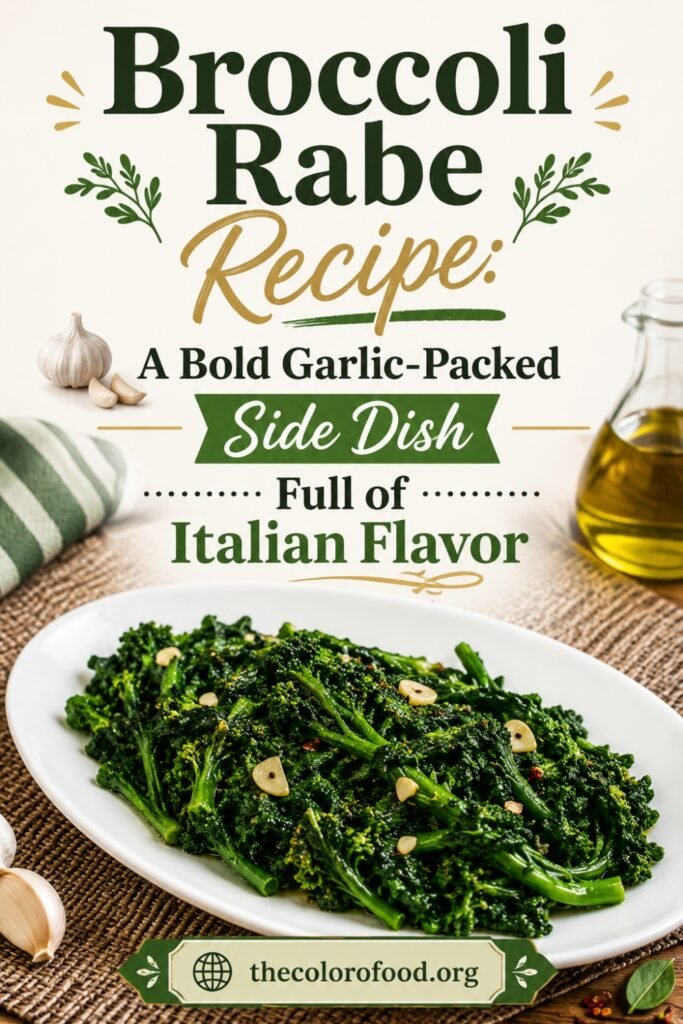
Broccoli rabe is one of those classic Italian side dishes that proves simple ingredients can create incredible flavor. Slightly bitter greens are balanced with garlic, olive oil, and hot pepper flakes for a savory dish that pairs beautifully with everything from grilled meats to pasta. This preparation keeps the broccoli rabe tender while preserving its bold flavor and vibrant color.
The quick blanching step helps mellow the bitterness, while sautéing everything together in olive oil creates a deeply satisfying finish. This traditional recipe is straightforward, rustic, and packed with flavor, making it a perfect side dish for both weeknight dinners and holiday meals.
Ingredients
- 2 big bunches of broccoli rabe, cleaned and trimmed
- 4 cloves garlic, chopped
- 1 teaspoon hot pepper flakes, or to taste
- 1/4 cup olive oil
- Salt, to taste
- Black pepper, to taste
Step 1: Clean and Trim the Broccoli Rabe
Before cooking, thoroughly wash the broccoli rabe to remove any grit or dirt trapped in the leaves and stems. Fill a large bowl or clean sink with cold water and submerge the bunches. Swish them around gently so any sand settles at the bottom. Lift the greens out rather than pouring the water off, which can redistribute the grit.
Once washed, trim about an inch off the bottom of the stems. If any stems are particularly thick or tough, peel the outer layer slightly with a vegetable peeler. This helps the broccoli rabe cook evenly and become tender without losing its structure.
Cleaning the broccoli rabe properly is an important step because leafy greens tend to hide dirt in the folds of the leaves. Taking a few extra minutes here ensures the finished dish tastes fresh and clean rather than gritty.
Step 2: Bring a Large Pot of Water to a Boil
Fill a large pot with water and bring it to a rolling boil over high heat. Generously salt the water. The salted water seasons the broccoli rabe from the inside and enhances its flavor during the blanching process.
Blanching is a key part of preparing broccoli rabe because it softens the stems and slightly mellows the natural bitterness of the greens. While broccoli rabe is loved for its pleasantly bitter flavor, boiling it briefly creates a more balanced and approachable taste.
Make sure the pot is large enough so the greens have room to move around. Crowding the pot can lead to uneven cooking.
Step 3: Blanch the Broccoli Rabe
Add the broccoli rabe to the boiling water carefully. Depending on the size of your pot, you may need to work in batches. Use tongs to press the greens into the water as they begin to wilt.
Cook the broccoli rabe for about 3 to 5 minutes, or until the stems become tender but still retain some bite. The leaves should soften completely and turn a vibrant green color.
Do not overcook the greens at this stage. Since they will also be sautéed later, slightly undercooking them during blanching prevents them from becoming mushy in the final dish.
Once cooked, drain the broccoli rabe well in a colander.
Step 4: Remove Excess Moisture
After draining, allow the broccoli rabe to sit for a few minutes so excess water can evaporate. You can gently press it with tongs or the back of a spoon to release additional moisture.
Removing excess water is important because too much liquid in the pan can dilute the flavor of the olive oil and garlic. The goal is to sauté the broccoli rabe, not steam it.
At this point, you can roughly chop the broccoli rabe into smaller sections if desired. Some people prefer longer strands for a more rustic presentation, while others like shorter pieces that are easier to serve and eat.
Step 5: Sauté the Garlic and Pepper Flakes
Place a large skillet over medium heat and pour in the olive oil. Once the oil is warm, add the chopped garlic and hot pepper flakes.
Cook gently for about 1 to 2 minutes, stirring frequently. The garlic should become fragrant and lightly golden, but not browned. Burnt garlic can create a bitter taste that overpowers the dish.
The hot pepper flakes add warmth and depth without making the dish overwhelmingly spicy. If you enjoy more heat, you can increase the amount slightly. If you prefer a milder version, reduce the pepper flakes to suit your taste.
The aroma at this stage is one of the highlights of the recipe. Garlic infuses the olive oil, creating a flavorful base that coats every bite of broccoli rabe beautifully.
Step 6: Add the Broccoli Rabe to the Pan
Transfer the drained broccoli rabe to the skillet with the garlic and oil. Toss everything together thoroughly using tongs or a wooden spoon.
Cook for another 3 to 5 minutes over medium heat, allowing the greens to absorb the flavors of the garlic, olive oil, and pepper flakes. Stir occasionally to prevent sticking and ensure even cooking.
As the broccoli rabe cooks, the leaves will become silky and tender while the stems remain pleasantly firm. The olive oil coats the greens, creating a rich texture that balances the slight bitterness perfectly.
Taste and season with salt and black pepper as needed.
Step 7: Adjust the Flavor and Serve
Before serving, taste the broccoli rabe one final time. Add additional salt, black pepper, or hot pepper flakes if desired.
Serve the broccoli rabe hot or warm as a side dish alongside roasted meats, grilled sausage, chicken, seafood, or pasta dishes. It can also be spooned onto crusty bread or served with beans for a hearty rustic meal.
The beauty of this dish lies in its simplicity. Every ingredient has a purpose, and together they create a bold, savory side dish that feels comforting and satisfying without requiring complicated techniques.
Tips for the Best Broccoli Rabe
- Choosing fresh broccoli rabe makes a huge difference in the final flavor. Look for bunches with vibrant green leaves and firm stems. Avoid yellowing leaves or limp stalks, which can indicate age and increased bitterness.
- Blanching the broccoli rabe before sautéing is essential for balancing the flavor. Skipping this step can leave the greens too harsh and bitter for some people. The boiling water softens the strong bite while preserving the vegetable’s character.
- Do not overcook the garlic. Garlic cooks quickly in olive oil and can turn bitter if browned too much. Keeping the heat at medium and stirring frequently helps maintain a sweet, mellow garlic flavor.
- Draining the broccoli rabe thoroughly prevents the skillet from becoming watery. Excess moisture can interfere with sautéing and dilute the rich olive oil flavor.
- High quality olive oil is important in this recipe because the ingredient list is so short. Since olive oil is one of the dominant flavors, using a good extra virgin olive oil creates a richer and more authentic taste.
- If the broccoli rabe tastes too bitter for your preference, you can blanch it a minute longer. Some people even change the water midway through boiling, although that can slightly reduce flavor intensity.
- This dish can be prepared ahead of time and reheated gently in a skillet before serving. In fact, some people feel the flavor improves after the garlic and pepper flakes have more time to infuse the greens.
- Leftover broccoli rabe is incredibly versatile. It can be added to pasta, layered into sandwiches, mixed into omelets, or served alongside roasted potatoes.
Essential Equipment Guide
- Large pot
- Colander
- Large skillet or sauté pan
- Tongs
- Cutting board
- Sharp knife
- Mixing spoon or wooden spoon
Pairings
- Italian sausage
- Grilled chicken
- Roasted potatoes
- Crusty Italian bread
- Pasta dishes
- White beans
- Grilled steak
- Roasted salmon
Variations
- Add anchovies to the olive oil for a deeper savory flavor.
- Toss with cooked pasta and Parmesan cheese for a quick meal.
- Add lemon zest for brightness.
- Include sautéed sausage for a heartier dish.
- Stir in cannellini beans for extra protein.
- Top with toasted breadcrumbs for added texture.
- Use less pepper flakes for a milder version.
- Finish with grated Pecorino Romano cheese.
Recipe Details
- Prep Time: 15 minutes
- Cook Time: 10 minutes
- Servings: 4
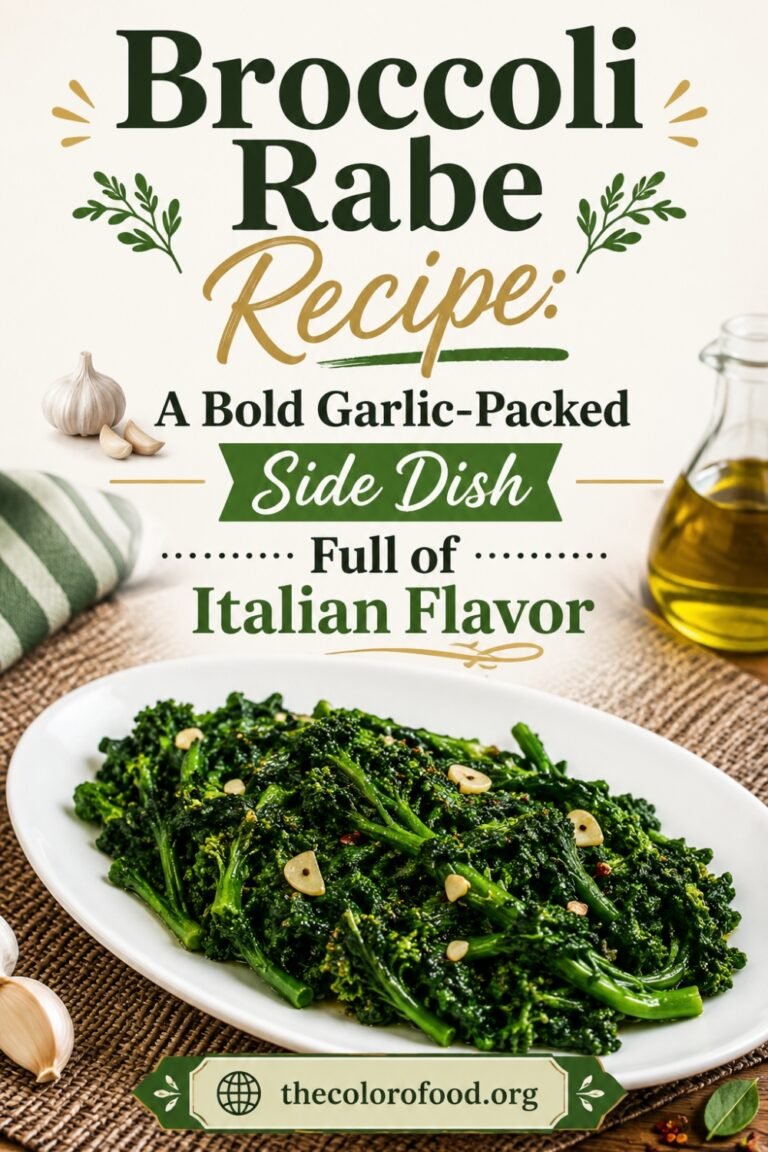
Broccoli Rabe Recipe: A Bold Garlic-Packed Side Dish Full of Italian Flavor
Broccoli rabe is one of those classic Italian side dishes that proves simple ingredients can create incredible flavor. Slightly bitter greens are balanced with garlic, olive oil, and hot pepper flakes for a savory dish that pairs beautifully with everything from grilled meats to pasta. This preparation keeps the broccoli rabe tender while preserving its bold flavor and vibrant color.
- Total Time: 25 Mins
- Yield: 4-6 servings
Ingredients
- 2 big bunches of broccoli rabe, cleaned and trimmed
- 4 cloves garlic, chopped
- 1 teaspoon hot pepper flakes, or to taste
- 1/4 cup olive oil
- Salt, to taste
- Black pepper, to taste
Instructions
Before cooking, thoroughly wash the broccoli rabe to remove any grit or dirt trapped in the leaves and stems. Fill a large bowl or clean sink with cold water and submerge the bunches. Swish them around gently so any sand settles at the bottom. Lift the greens out rather than pouring the water off, which can redistribute the grit.
Once washed, trim about an inch off the bottom of the stems. If any stems are particularly thick or tough, peel the outer layer slightly with a vegetable peeler. This helps the broccoli rabe cook evenly and become tender without losing its structure.
Cleaning the broccoli rabe properly is an important step because leafy greens tend to hide dirt in the folds of the leaves. Taking a few extra minutes here ensures the finished dish tastes fresh and clean rather than gritty.
Step 2: Bring a Large Pot of Water to a BoilFill a large pot with water and bring it to a rolling boil over high heat. Generously salt the water. The salted water seasons the broccoli rabe from the inside and enhances its flavor during the blanching process.
Blanching is a key part of preparing broccoli rabe because it softens the stems and slightly mellows the natural bitterness of the greens. While broccoli rabe is loved for its pleasantly bitter flavor, boiling it briefly creates a more balanced and approachable taste.
Make sure the pot is large enough so the greens have room to move around. Crowding the pot can lead to uneven cooking.
Step 3: Blanch the Broccoli RabeAdd the broccoli rabe to the boiling water carefully. Depending on the size of your pot, you may need to work in batches. Use tongs to press the greens into the water as they begin to wilt.
Cook the broccoli rabe for about 3 to 5 minutes, or until the stems become tender but still retain some bite. The leaves should soften completely and turn a vibrant green color.
Do not overcook the greens at this stage. Since they will also be sautéed later, slightly undercooking them during blanching prevents them from becoming mushy in the final dish.
Once cooked, drain the broccoli rabe well in a colander.
Step 4: Remove Excess MoistureAfter draining, allow the broccoli rabe to sit for a few minutes so excess water can evaporate. You can gently press it with tongs or the back of a spoon to release additional moisture.
Removing excess water is important because too much liquid in the pan can dilute the flavor of the olive oil and garlic. The goal is to sauté the broccoli rabe, not steam it.
At this point, you can roughly chop the broccoli rabe into smaller sections if desired. Some people prefer longer strands for a more rustic presentation, while others like shorter pieces that are easier to serve and eat.
Step 5: Sauté the Garlic and Pepper FlakesPlace a large skillet over medium heat and pour in the olive oil. Once the oil is warm, add the chopped garlic and hot pepper flakes.
Cook gently for about 1 to 2 minutes, stirring frequently. The garlic should become fragrant and lightly golden, but not browned. Burnt garlic can create a bitter taste that overpowers the dish.
The hot pepper flakes add warmth and depth without making the dish overwhelmingly spicy. If you enjoy more heat, you can increase the amount slightly. If you prefer a milder version, reduce the pepper flakes to suit your taste.
The aroma at this stage is one of the highlights of the recipe. Garlic infuses the olive oil, creating a flavorful base that coats every bite of broccoli rabe beautifully.
Step 6: Add the Broccoli Rabe to the PanTransfer the drained broccoli rabe to the skillet with the garlic and oil. Toss everything together thoroughly using tongs or a wooden spoon.
Cook for another 3 to 5 minutes over medium heat, allowing the greens to absorb the flavors of the garlic, olive oil, and pepper flakes. Stir occasionally to prevent sticking and ensure even cooking.
As the broccoli rabe cooks, the leaves will become silky and tender while the stems remain pleasantly firm. The olive oil coats the greens, creating a rich texture that balances the slight bitterness perfectly.
Taste and season with salt and black pepper as needed.
Step 7: Adjust the Flavor and ServeBefore serving, taste the broccoli rabe one final time. Add additional salt, black pepper, or hot pepper flakes if desired.
Serve the broccoli rabe hot or warm as a side dish alongside roasted meats, grilled sausage, chicken, seafood, or pasta dishes. It can also be spooned onto crusty bread or served with beans for a hearty rustic meal.
The beauty of this dish lies in its simplicity. Every ingredient has a purpose, and together they create a bold, savory side dish that feels comforting and satisfying without requiring complicated techniques.
- Prep Time: 15 Mins
- Cook Time: 10 Mins