
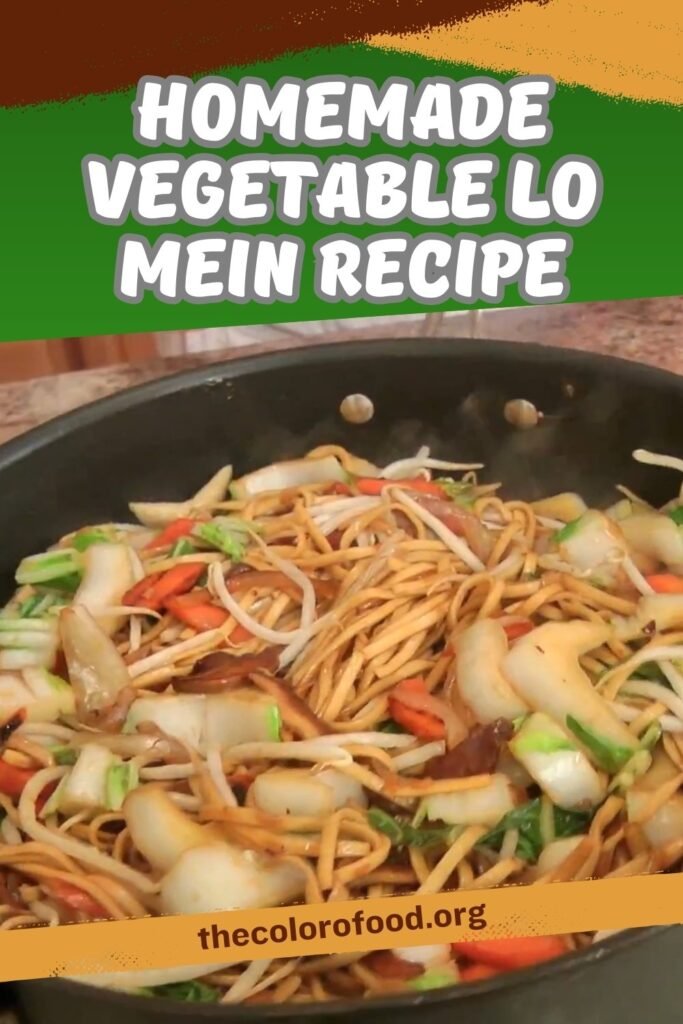
This veggie lo mein is a quick stir fried noodle dish with tender Chinese egg noodles, crisp tender vegetables and a glossy, savory soy oyster sauce. It comes together in about 25 minutes and serves four, making it perfect for a weeknight dinner.
Ingredients
- 8 oz of Chinese egg noodles
- 1 Tbsp of vegetable oil
- 1 onion, sliced into half moon pieces
- 1 Tbsp of chopped ginger
- 5 oz of shiitake mushrooms, sliced
- 1 carrot, sliced into matchstick pieces
- 3 baby bok choy, each quartered
- Handful of bean sprouts
- 3 Tbsp of low sodium soy sauce
- 2 Tbsp of oyster sauce
- 1 tsp of sugar
1. Prepare the noodles and sauce
Start by filling a large pot with plenty of water and bring it to a full rolling boil so the noodles can cook quickly without sticking. While the water heats, measure the soy sauce, oyster sauce and sugar into a small bowl and stir until the sugar dissolves, creating a smooth, glossy base for the lo mein sauce.
Once the water boils, add the Chinese egg noodles and cook them according to the package directions; for many brands this will be around 3 minutes, just until they are tender but still pleasantly chewy. Avoid overcooking at this stage because the noodles will spend another minute or two in the hot pan and should stay slightly firm so they do not turn soft when tossed with the vegetables.
As soon as the noodles are done, drain them well and set them aside while you finish the stir fry, keeping them nearby so they can be added as soon as the vegetables are ready. If they seem to stick a little as they sit, use clean tongs to gently loosen and separate them before they go into the pan to help them coat evenly with the sauce later.
2. Heat the wok and oil
Place a large skillet or wok over high heat, giving it a moment to get thoroughly hot before adding anything so the vegetables sear instead of steaming. Pour in the vegetable oil and let it heat until it becomes lightly smoky, which signals that the pan is hot enough to give the noodles and vegetables that classic stir fry flavor.
This very hot oil helps the aromatics release their fragrance instantly, so resist the urge to lower the heat at this stage; the quick contact with high heat is what keeps the vegetables crisp tender. Swirling the pan gently to coat the surface with oil also helps prevent any sticking when you add the onions, ginger and mushrooms.
3. Stir fry the aromatics and vegetables
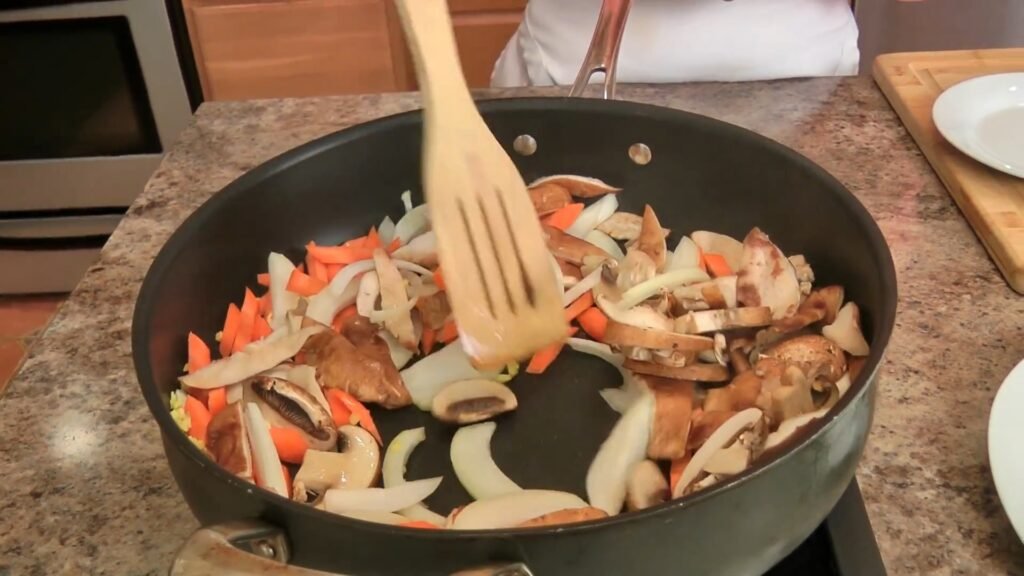
Add the sliced onion and chopped ginger to the hot, oiled pan along with the sliced shiitake mushrooms and matchstick carrots, tossing everything quickly so it is coated in the shimmering oil. Stir fry this mixture over high heat for about 3 minutes until the onions soften slightly, the mushrooms release a bit of their moisture and the carrots start to become tender while still holding some crunch.
Keep the vegetables moving by stirring and flipping them frequently so they cook evenly and do not scorch in the hot spots of the pan. The goal here is to build a flavorful base with the sweet onion, bright ginger and earthy mushrooms, which will cling to the noodles later and give each bite more depth.
During this stir fry time, check that the noodles are drained and the sauce is ready so you can move smoothly into the next step without pausing and losing the heat in the pan. If at any point the pan looks very dry and the vegetables seem to catch, you can add a very small splash of water to create a little steam while keeping the heat high.
4. Add noodles, bok choy and sauce
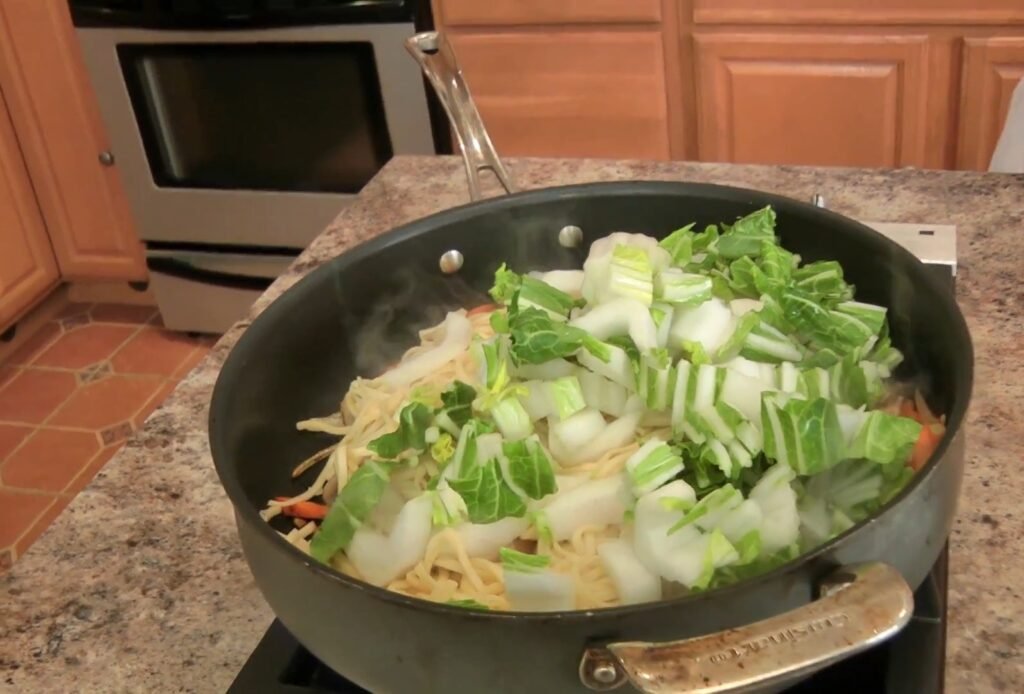
Once the vegetables have sautéed for a few minutes, add the drained egg noodles directly into the pan, using tongs to gently lift and separate them so they combine with the onions, mushrooms and carrots. Scatter the quartered baby bok choy over the top, positioning some of the white stems against the bottom of the pan so they have a chance to soften while the leafy tops wilt.
Pour the prepared mixture of soy sauce, oyster sauce and sugar evenly over the noodles and vegetables, then toss everything together so the sauce coats each strand of noodle and every piece of vegetable. Cook this mixture for about 1 to 2 minutes, just until the bok choy is wilted and tender but still vibrantly green and the noodles are glossy from the absorbed sauce.
Use a lifting and folding motion with tongs rather than aggressive stirring, because this keeps the noodles intact and distributes the sauce more evenly throughout the pan. As the sauce heats, it will cling to the noodles and slightly thicken, creating a savory, slightly sweet coating that ties the dish together without becoming heavy.
5. Finish with bean sprouts and serve
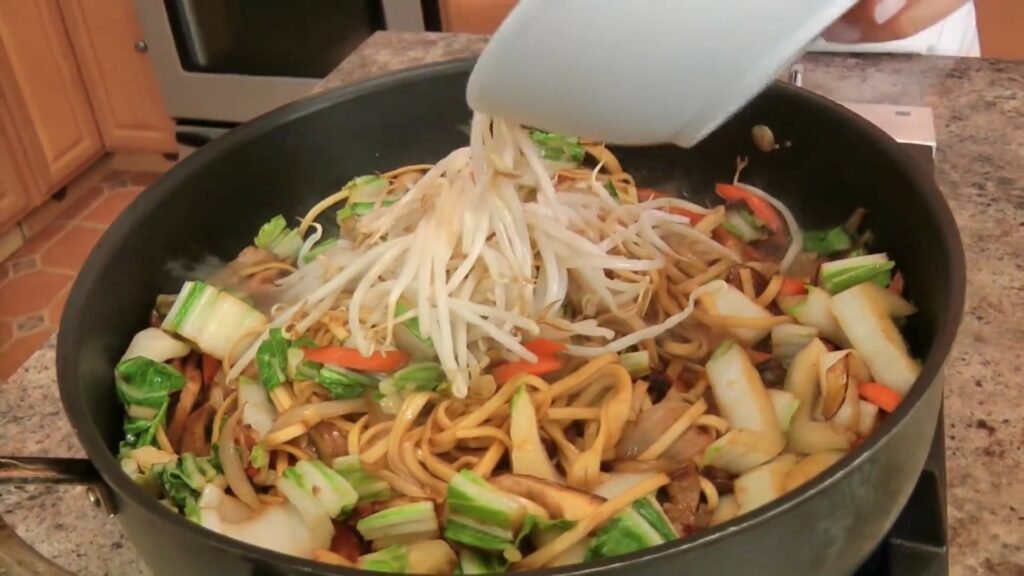
In the last 30 seconds of cooking, add a generous handful of bean sprouts to the wok, scattering them over the top of the noodles so they barely soften in the residual heat. Quickly toss once or twice just to mix them through, then remove the pan from the heat so the sprouts retain their fresh crunch and the vegetables do not overcook.
This final addition of crisp bean sprouts gives the finished lo mein a bright, juicy texture contrast and a light, fresh flavor that balances the richness of the soy and oyster sauce. Serve the veggie lo mein immediately, piling the noodles into warm bowls so the steam carries the aroma of ginger, mushrooms and bok choy to the table.
6. Tips for perfect veggie lo mein
For the best texture, keep every part of the process as quick and hot as possible, having all ingredients prepped before turning on the stove so the vegetables can move from pan to plate without waiting.
Chinese egg noodles are ideal because they cook fast and stay pleasantly chewy, but if using another noodle type, watch the timing closely and stop cooking them just shy of fully tender so they can finish in the hot pan without turning soft. Using a wok or a very wide skillet matters because it gives the vegetables enough surface area to sear and the noodles enough space to toss, which keeps everything from steaming and losing its bright color and snap.
The order in which the vegetables are added also affects the final result, so keep the onion, ginger, mushrooms and carrots in the pan long enough to soften while still protecting their structure, then add the bok choy and sprouts later to preserve their freshness.
Gentle tossing with tongs keeps the noodles long and intact, which makes the dish more visually appealing and helps the sauce cling in thin layers rather than pooling at the bottom of the pan. Because the sauce contains both soy and oyster sauce, it brings plenty of seasoning, so taste before adding any extra salt and adjust only if needed, remembering that the flavors concentrate slightly as the noodles sit.
If you prefer a slightly looser sauce, reserve a spoonful of the starchy noodle cooking water and drizzle it into the pan with the sauce, which helps the seasonings disperse evenly and gives the noodles a silky coating.
For more pronounced ginger flavor, increase the chopped ginger slightly or slice a few thin coins to sauté with the onions, removing them before serving if you like a subtler bite while still enjoying the aromatic depth. Leftovers reheat well in a hot skillet with a teaspoon of water to revive the sauce, making this lo mein a convenient make ahead option for lunches or a second quick meal.
Essential equipment guide
- Large pot for boiling noodles
- Large skillet or wok
- Small bowl for mixing sauce
- Tongs or large cooking fork
- Cutting board
- Sharp chef knife
Nutritional information
Approximate per serving values, assuming 4 servings.
| Nutrient | Amount (per serving) |
|---|---|
| Calories | About 300–350 kcal |
| Carbohydrates | About 50–55 g |
| Protein | About 10–12 g |
| Fat | About 7–10 g |
| Fiber | About 4–5 g |
| Sodium | Moderate, depends on soy sauce brand |
Pairings
- Steamed or pan fried dumplings for a fuller takeout style meal.
- Simple cucumber salad with rice vinegar and sesame for a refreshing side.
- Light broth based soup such as miso or clear vegetable soup.
- Hot tea or chilled green tea to complement the savory sauce.
Variations
- Add tofu, shrimp or thinly sliced chicken for extra protein.
- Swap shiitake mushrooms for button or cremini if those are easier to find.
- Use additional vegetables like snow peas or bell peppers for more color and crunch.
- Adjust the sauce by adding a touch of chili paste for gentle heat.
Time and servings
Print
Homemade Vegetable Lo Mein Recipe
This veggie lo mein is a quick stir fried noodle dish with tender Chinese egg noodles, crisp tender vegetables and a glossy, savory soy oyster sauce. It comes together in about 25 minutes and serves four, making it perfect for a weeknight dinner.
- Total Time: 25 Mins
Ingredients
- 8 oz of Chinese egg noodles
- 1 Tbsp of vegetable oil
- 1 onion, sliced into half moon pieces
- 1 Tbsp of chopped ginger
- 5 oz of shiitake mushrooms, sliced
- 1 carrot, sliced into matchstick pieces
- 3 baby bok choy, each quartered
- Handful of bean sprouts
- 3 Tbsp of low sodium soy sauce
- 2 Tbsp of oyster sauce
- 1 tsp of sugar
Instructions
Start by filling a large pot with plenty of water and bring it to a full rolling boil so the noodles can cook quickly without sticking. While the water heats, measure the soy sauce, oyster sauce and sugar into a small bowl and stir until the sugar dissolves, creating a smooth, glossy base for the lo mein sauce.
Once the water boils, add the Chinese egg noodles and cook them according to the package directions; for many brands this will be around 3 minutes, just until they are tender but still pleasantly chewy. Avoid overcooking at this stage because the noodles will spend another minute or two in the hot pan and should stay slightly firm so they do not turn soft when tossed with the vegetables.
As soon as the noodles are done, drain them well and set them aside while you finish the stir fry, keeping them nearby so they can be added as soon as the vegetables are ready. If they seem to stick a little as they sit, use clean tongs to gently loosen and separate them before they go into the pan to help them coat evenly with the sauce later.
2. Heat the wok and oilPlace a large skillet or wok over high heat, giving it a moment to get thoroughly hot before adding anything so the vegetables sear instead of steaming. Pour in the vegetable oil and let it heat until it becomes lightly smoky, which signals that the pan is hot enough to give the noodles and vegetables that classic stir fry flavor.
This very hot oil helps the aromatics release their fragrance instantly, so resist the urge to lower the heat at this stage; the quick contact with high heat is what keeps the vegetables crisp tender. Swirling the pan gently to coat the surface with oil also helps prevent any sticking when you add the onions, ginger and mushrooms.
3. Stir fry the aromatics and vegetablesAdd the sliced onion and chopped ginger to the hot, oiled pan along with the sliced shiitake mushrooms and matchstick carrots, tossing everything quickly so it is coated in the shimmering oil. Stir fry this mixture over high heat for about 3 minutes until the onions soften slightly, the mushrooms release a bit of their moisture and the carrots start to become tender while still holding some crunch.
Keep the vegetables moving by stirring and flipping them frequently so they cook evenly and do not scorch in the hot spots of the pan. The goal here is to build a flavorful base with the sweet onion, bright ginger and earthy mushrooms, which will cling to the noodles later and give each bite more depth.
During this stir fry time, check that the noodles are drained and the sauce is ready so you can move smoothly into the next step without pausing and losing the heat in the pan. If at any point the pan looks very dry and the vegetables seem to catch, you can add a very small splash of water to create a little steam while keeping the heat high.
4. Add noodles, bok choy and sauceOnce the vegetables have sautéed for a few minutes, add the drained egg noodles directly into the pan, using tongs to gently lift and separate them so they combine with the onions, mushrooms and carrots. Scatter the quartered baby bok choy over the top, positioning some of the white stems against the bottom of the pan so they have a chance to soften while the leafy tops wilt.
Pour the prepared mixture of soy sauce, oyster sauce and sugar evenly over the noodles and vegetables, then toss everything together so the sauce coats each strand of noodle and every piece of vegetable. Cook this mixture for about 1 to 2 minutes, just until the bok choy is wilted and tender but still vibrantly green and the noodles are glossy from the absorbed sauce.
Use a lifting and folding motion with tongs rather than aggressive stirring, because this keeps the noodles intact and distributes the sauce more evenly throughout the pan. As the sauce heats, it will cling to the noodles and slightly thicken, creating a savory, slightly sweet coating that ties the dish together without becoming heavy.
5. Finish with bean sprouts and serveIn the last 30 seconds of cooking, add a generous handful of bean sprouts to the wok, scattering them over the top of the noodles so they barely soften in the residual heat. Quickly toss once or twice just to mix them through, then remove the pan from the heat so the sprouts retain their fresh crunch and the vegetables do not overcook.
This final addition of crisp bean sprouts gives the finished lo mein a bright, juicy texture contrast and a light, fresh flavor that balances the richness of the soy and oyster sauce. Serve the veggie lo mein immediately, piling the noodles into warm bowls so the steam carries the aroma of ginger, mushrooms and bok choy to the table.
- Prep Time: 15 Mins
- Cook Time: 10 Mins