
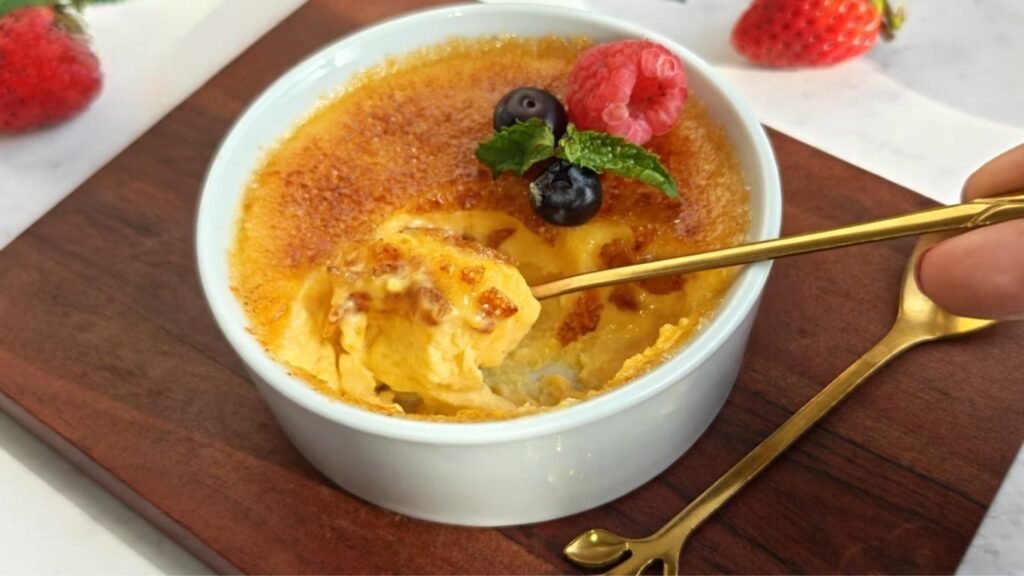
Creme brulee is a timeless French dessert known for its creamy custard base topped with a crisp, caramelized sugar crust. With just a handful of simple ingredients like egg yolks, cream, sugar, vanilla, and a hint of orange zest, you can create this elegant treat easily at home. This recipe offers a foolproof way to achieve the perfect balance of smooth custard and crunchy caramel topping. Below is a detailed guide to making delicious creme brulee, including timing, techniques, and helpful tips.
Ingredients for Six Servings
- 3 Egg Yolks
- 1/4 cup Granulated Sugar + 1 Tbsp per serving (for caramelizing)
- 1 1/2 cups Heavy Cream
- 1 tsp Vanilla Extract
- 1/2 tsp Orange Zest
- 1/8 tsp Salt
- Fresh Strawberries or Raspberries (for garnish)
Step 1: Prepare the Oven and Ingredients
Preheat your oven to 300°F (150°C). This moderate temperature allows the custard to bake gently, creating a smooth texture without curdling or cracking.
Gather all the ingredients. Make sure the egg yolks are separated from the whites carefully and kept at room temperature for best mixing results. You will need six ramekins—small, ovenproof dishes traditionally used for this dessert.
Step 2: Heat the Cream
Pour the 1 1/2 cups of heavy cream into a saucepan and heat it over medium heat just until it almost reaches boiling point. You want to see small bubbles forming around the edges but avoid a full boil to prevent curdling when combined with eggs.
Remove the cream from heat as soon as it is hot enough.
Step 3: Whisk Egg Yolks and Sugar
In a large mixing bowl, whisk together the 3 egg yolks with 1/4 cup granulated sugar. Use a hand whisk or electric mixer on medium speed. Whisk until the egg yolks lighten in color and become a bit frothy—this step incorporates air, yielding a smoother custard.
Step 4: Add Vanilla, Orange Zest, and Salt
Add 1 teaspoon vanilla extract and 1/2 teaspoon fresh orange zest to the egg yolks and sugar mixture. The orange zest adds a delicate citrus aroma that complements the creamy custard without overpowering it.
Add a pinch (about 1/8 teaspoon) of salt as well. This subtle saltiness enhances the sweetness and brings out the richness of the ingredients.
Step 5: Temper the Egg Mixture
To avoid scrambling the eggs, slowly pour the hot cream into the egg mixture while continuously whisking. This technique, called tempering, gradually raises the temperature of the eggs.
Start by adding just a little of the cream, whisking constantly, then slowly pour in the rest of the cream as the mixture warms up gradually. Once mixed, the custard base is ready.
Step 6: Pour into Ramekins
Place your ramekins on a baking dish or tray. Carefully pour the custard mixture into each ramekin until they are about three-quarters full. This allows room for the sugar topping and ensures even cooking.
Step 7: Create the Water Bath
Fill the baking tray with hot water enough to come halfway up the sides of the ramekins. This water bath (bain-marie) gently cooks the custard evenly by surrounding it with moist heat, preventing cracks or curdling.
Step 8: Bake the Custard
Place the baking tray in the preheated oven. Bake for about 45 minutes. You want the custard to be mostly set but still slightly jiggly in the center when shaken gently.
Overbaking will result in a rubbery texture, so check around 40 minutes for doneness.
Step 9: Cool and Refrigerate
Carefully remove the ramekins from the water bath and let them cool on the counter for 30 minutes. After cooling, cover and refrigerate for at least 2½ to 3 hours. Chilling completely allows the custard to firm up and the flavors to meld beautifully.
Step 10: Caramelize the Sugar Topping
When ready to serve, sprinkle about 1 tablespoon of granulated sugar evenly over the top of each custard. Using a kitchen blowtorch, caramelize the sugar by heating it until it melts, bubbles, and turns golden brown and crisp.
Move the flame around constantly to avoid burning any one spot. The caramelization happens quickly, so watch carefully.
If you don’t have a torch, you can place the sugared ramekins under a broiler for a minute or two, but this requires close attention to prevent burning.
Step 11: Garnish and Serve
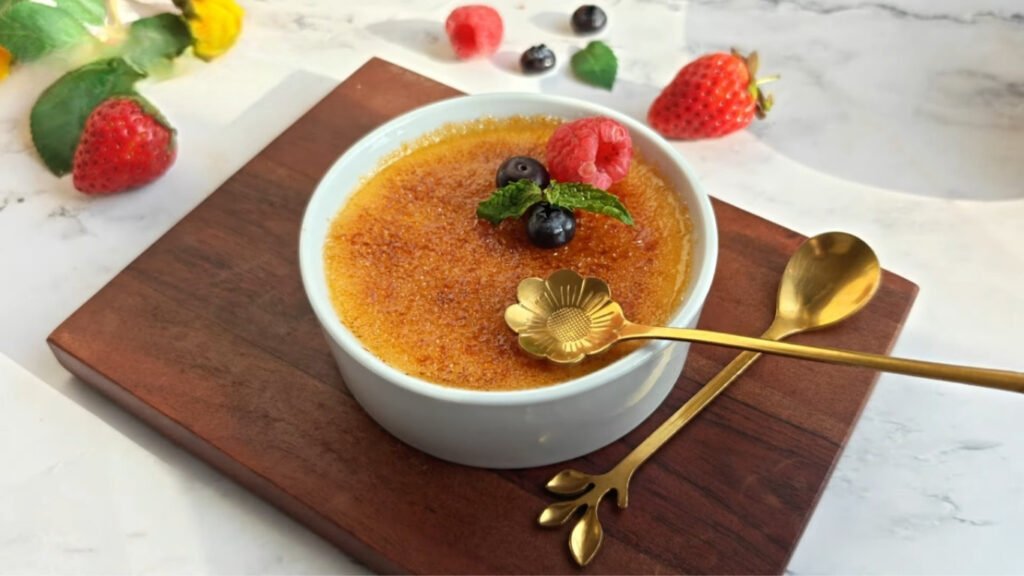
Let the caramelized sugar cool for a couple of minutes to harden. Garnish each creme brulee with fresh strawberries or raspberries for a pop of color and tartness that contrasts beautifully with the rich custard.
Serve immediately for the best textural contrast between creamy custard and crisp caramel.
Tips for Success
- Always use fresh, high-quality ingredients. Fresh orange zest can significantly elevate the flavor.
- Practice patience when tempering the eggs; gradual incorporation of the hot cream is key to avoiding lumps.
- Use small, shallow ramekins to ensure even baking.
- If you don’t own a kitchen torch, homemade caramel can be tricky but not impossible using your broiler.
- Let the custard chill fully to set properly; rushed refrigeration might cause the custard to be too soft.
Essential Equipment Guide
- Small saucepan
- Electric mixer
- Deep roasting pan
- 6 1-inch deep ramekins
- Small kitchen blowtorch
Nutritional Information
| Nutrient (per serving) | Amount |
|---|---|
| Calories | ~350 |
| Total Fat | 28g |
| Saturated Fat | 16g |
| Carbohydrates | 22g |
| Protein | 4g |
Prep, Cook, Servings
- Prep Time: 15 minutes
- Cook Time: 35-45 minutes (plus 3+ hours chilling)
- Servings: 4-6
Pairings
- Fresh strawberries or raspberries for a tart contrast
- Shortbread cookies or biscotti for crunch
- Coffee or espresso to balance richness
Variations
- Add pumpkin puree and pumpkin pie spice for a fall twist
- Incorporate raspberries at the bottom for fruity layers
- Use vanilla bean instead of extract for deeper flavor
Why Creme Brulee Is So Special
Creme brulee’s allure comes from the contrast of its textures: the creamy, smooth, velvety custard base under a thin, crackable caramel shell. It’s deceptively simple and relies on balancing heat, timing, and quality ingredients.
The addition of subtle orange zest alongside vanilla adds a unique aromatic touch that sets this recipe apart while keeping the traditional charm. The hint of salt enhances the sweetness without making it taste salty.
Whether for a holiday dinner or an elegant treat on any night, mastering creme brulee enhances your dessert repertoire and impresses guests with a classic French indulgence.
Print
How to Make Creme Brulee: A Step-By-Step Recipe
Creme brulee is a timeless French dessert known for its creamy custard base topped with a crisp, caramelized sugar crust. With just a handful of simple ingredients like egg yolks, cream, sugar, vanilla, and a hint of orange zest, you can create this elegant treat easily at home. This recipe offers a foolproof way to achieve the perfect balance of smooth custard and crunchy caramel topping. Below is a detailed guide to making delicious creme brulee, including timing, techniques, and helpful tips.
- Total Time: 1 Hr
Ingredients
- 3 Egg Yolks
- 1/4 cup Granulated Sugar + 1 Tbsp per serving (for caramelizing)
- 1 1/2 cups Heavy Cream
- 1 tsp Vanilla Extract
- 1/2 tsp Orange Zest
- 1/8 tsp Salt
- Fresh Strawberries or Raspberries (for garnish)
Instructions
Preheat your oven to 300°F (150°C). This moderate temperature allows the custard to bake gently, creating a smooth texture without curdling or cracking.
Gather all the ingredients. Make sure the egg yolks are separated from the whites carefully and kept at room temperature for best mixing results. You will need six ramekins—small, ovenproof dishes traditionally used for this dessert.
Step 2: Heat the Cream
Pour the 1 1/2 cups of heavy cream into a saucepan and heat it over medium heat just until it almost reaches boiling point. You want to see small bubbles forming around the edges but avoid a full boil to prevent curdling when combined with eggs.
Remove the cream from heat as soon as it is hot enough.
Step 3: Whisk Egg Yolks and Sugar
In a large mixing bowl, whisk together the 3 egg yolks with 1/4 cup granulated sugar. Use a hand whisk or electric mixer on medium speed. Whisk until the egg yolks lighten in color and become a bit frothy—this step incorporates air, yielding a smoother custard.
Step 4: Add Vanilla, Orange Zest, and Salt
Add 1 teaspoon vanilla extract and 1/2 teaspoon fresh orange zest to the egg yolks and sugar mixture. The orange zest adds a delicate citrus aroma that complements the creamy custard without overpowering it.
Add a pinch (about 1/8 teaspoon) of salt as well. This subtle saltiness enhances the sweetness and brings out the richness of the ingredients.
Step 5: Temper the Egg Mixture
To avoid scrambling the eggs, slowly pour the hot cream into the egg mixture while continuously whisking. This technique, called tempering, gradually raises the temperature of the eggs.
Start by adding just a little of the cream, whisking constantly, then slowly pour in the rest of the cream as the mixture warms up gradually. Once mixed, the custard base is ready.
Step 6: Pour into Ramekins
Place your ramekins on a baking dish or tray. Carefully pour the custard mixture into each ramekin until they are about three-quarters full. This allows room for the sugar topping and ensures even cooking.
Step 7: Create the Water Bath
Fill the baking tray with hot water enough to come halfway up the sides of the ramekins. This water bath (bain-marie) gently cooks the custard evenly by surrounding it with moist heat, preventing cracks or curdling.
Step 8: Bake the Custard
Place the baking tray in the preheated oven. Bake for about 45 minutes. You want the custard to be mostly set but still slightly jiggly in the center when shaken gently.
Overbaking will result in a rubbery texture, so check around 40 minutes for doneness.
Step 9: Cool and Refrigerate
Carefully remove the ramekins from the water bath and let them cool on the counter for 30 minutes. After cooling, cover and refrigerate for at least 2½ to 3 hours. Chilling completely allows the custard to firm up and the flavors to meld beautifully.
Step 10: Caramelize the Sugar Topping
When ready to serve, sprinkle about 1 tablespoon of granulated sugar evenly over the top of each custard. Using a kitchen blowtorch, caramelize the sugar by heating it until it melts, bubbles, and turns golden brown and crisp.
Move the flame around constantly to avoid burning any one spot. The caramelization happens quickly, so watch carefully.
If you don’t have a torch, you can place the sugared ramekins under a broiler for a minute or two, but this requires close attention to prevent burning.
Step 11: Garnish and Serve
Let the caramelized sugar cool for a couple of minutes to harden. Garnish each creme brulee with fresh strawberries or raspberries for a pop of color and tartness that contrasts beautifully with the rich custard.
Serve immediately for the best textural contrast between creamy custard and crisp caramel.
- Prep Time: 15 Mins
- Cook Time: 45 Mins