

This cozy chicken noodle soup starts with a deeply flavored homemade stock, then layers in fresh vegetables, herbs and tender egg noodles for a classic, from scratch bowl that tastes even better than takeout. It takes time to simmer but the hands on work is minimal and the long cook turns simple ingredients into a rich, golden broth.
Ingredients
For the stock
- 4 1/2 lb whole chicken, cleaned
- 3 parsnips, roughly chopped
- 3 carrots, roughly chopped
- 4 stalks of celery, halved
- 2 onions, halved
- 1 head of garlic, halved
- Handful of parsley
- Salt and pepper
- Olive oil
For the remaining soup
- 2 carrots, peeled and diced
- 2 parsnips, peeled and diced
- 2 stalks of celery, diced
- 6 oz egg noodles
- 1/4 cup fresh parsley, finely minced
- 1/4 cup fresh dill, finely minced
- 1/4 cup chopped chives
1. Roast the chicken for deeper flavor
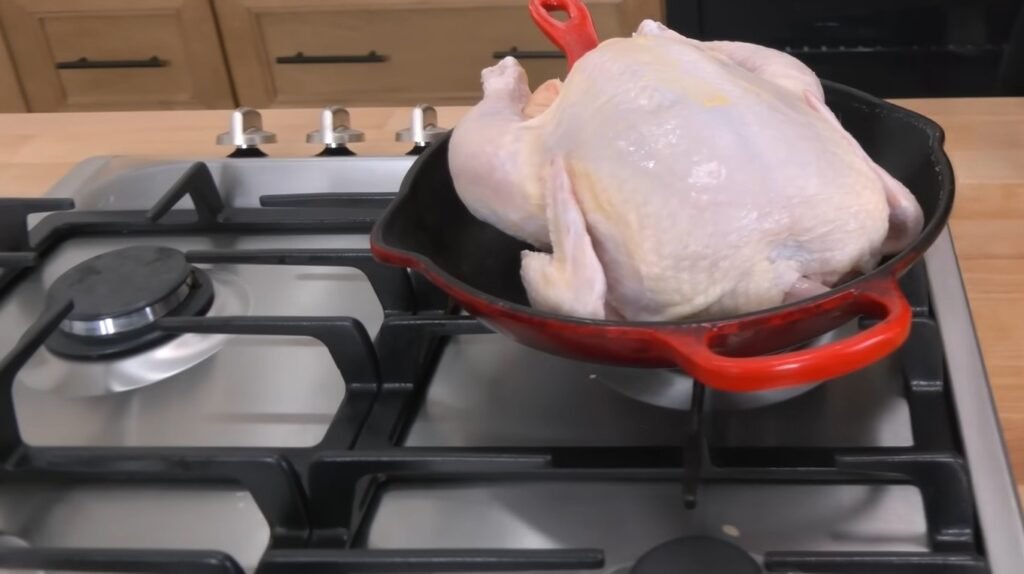
Start by building flavor in the stock with roasted chicken and vegetables, which gives the broth a rich, slightly caramelized base.
- Preheat the oven to 425 degrees Fahrenheit and place the cleaned whole chicken in a roasting pan lightly coated with olive oil.
- Drizzle a little olive oil over the chicken, season generously with salt and pepper, and tuck a small sprig of parsley or another herb inside the cavity if you like a more aromatic finish.
- Roast the chicken for about 1 1/2 hours, or until the skin is deep golden and the juices run clear when pierced between the leg and thigh.
Allowing the chicken to roast fully at this stage means you will later shred meat that is already full of roasted flavor, which will make the final soup taste far more complex than if you started with raw chicken poached directly in water.
2. Build the homemade stock
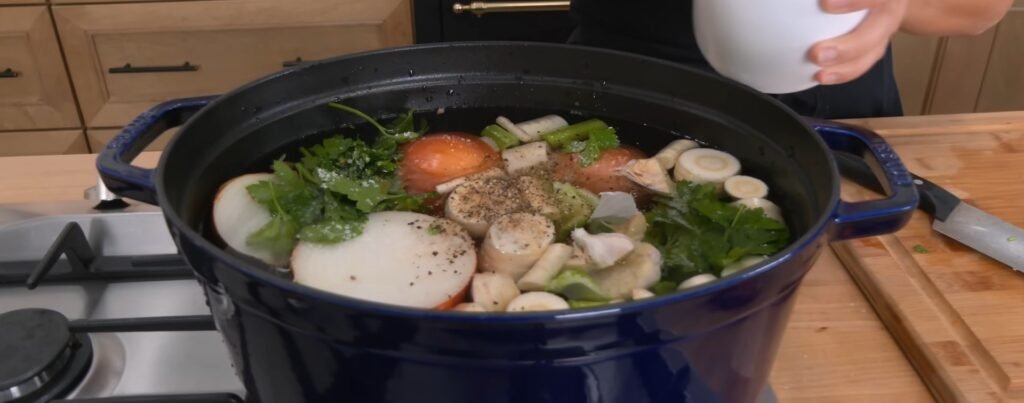
Once the chicken is roasted, it is time to turn it and the aromatic vegetables into a soothing, golden stock.
- Transfer the roasted chicken to a large, heavy pot and add the roughly chopped parsnips, carrots, celery, onions, halved head of garlic and a handful of parsley.
- Drizzle in a bit of olive oil if the pot is very dry, season with salt and pepper, then add enough water to fully cover the chicken and vegetables so they can simmer gently and release their flavor.
- Bring the mixture up to a boil over medium high heat, then immediately lower the heat and keep it at a gentle simmer so the broth stays clear rather than turning cloudy.
This slow, gentle simmer allows the collagen in the chicken and the starches in the root vegetables to break down gradually, resulting in a broth that tastes silky and full without feeling heavy.
3. Simmer low and slow
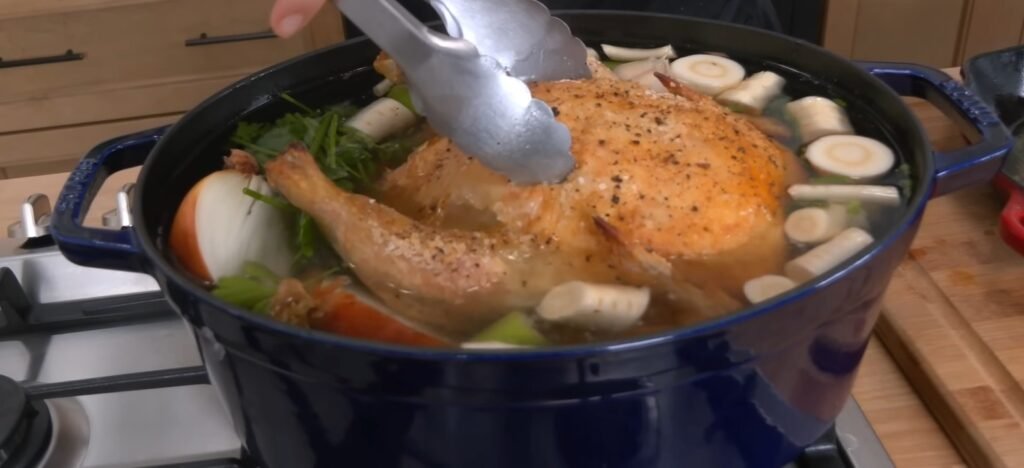
Time is the secret ingredient that transforms this simple pot into a deeply flavored base for your soup.
- Partially cover the pot with a lid, leaving it slightly ajar to let some steam escape while still preventing too much liquid from evaporating.
- Keep the heat as low as possible while maintaining a gentle simmer and cook the stock for about 3 1/2 hours, checking occasionally to skim any foam or excess fat that may rise to the surface.
- If the liquid reduces too much, top it up with a little hot water so the chicken and vegetables stay mostly submerged and continue to infuse the stock.
By the end of this long cooking time, the chicken will be falling apart and the vegetables will have given their flavor to the liquid, which is exactly what you want because you will use a fresh batch of diced vegetables later for better texture.
4. Strain, skim and shred the chicken
Once the stock is done, the next step is to separate the rich broth from the solids and prepare the meat that will go back into the soup.
- Carefully lift the chicken out of the pot onto a large plate or tray and let it cool until it is comfortable to handle without burning your hands.
- Use a ladle or spoon to skim as much excess fat from the top of the broth as you like, adjusting to your preferred richness level while keeping enough for good mouthfeel.
- Strain out and discard the cooked stock vegetables if you prefer a clearer broth with better texture from the fresh diced vegetables you will add later.
When the chicken is cool enough, remove and discard the skin and bones, then shred the meat into bite sized pieces that will be easy to eat in a spoonful of soup.
5. Sauté the fresh vegetables
Using a fresh batch of diced vegetables ensures the finished soup has a pleasant bite and attractive color instead of overcooked pieces that have simmered for hours.
- In a clean large soup pot, heat a couple of tablespoons of olive oil over medium heat until shimmering.
- Add the diced carrots, parsnips and celery and season lightly with salt and pepper, then cook for about 5 to 7 minutes until they start to soften but still hold their shape.
- Stir occasionally so the vegetables cook evenly and pick up just a hint of color, which adds another layer of subtle sweetness to the broth.
This step echoes traditional soup making where a base of sautéed onion, carrot and celery, often called a mirepoix, forms the flavor backbone of many comforting dishes.
6. Combine broth, vegetables and noodles
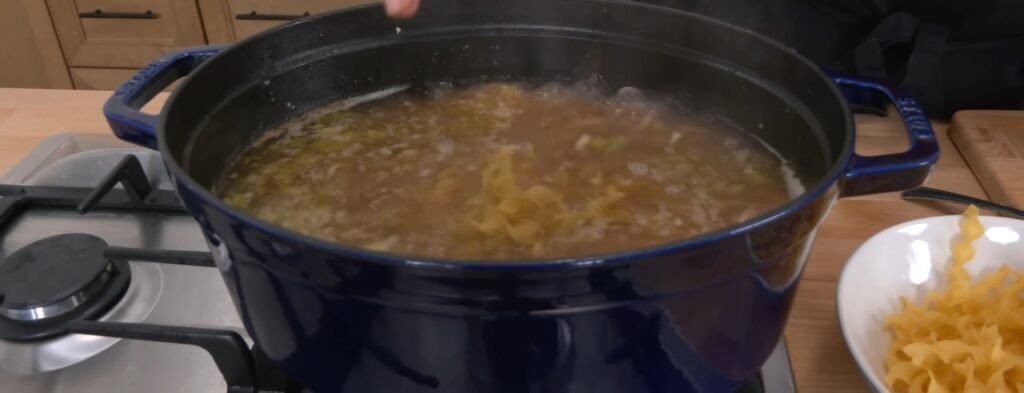
Now it is time to bring together the flavorful broth, fresh vegetables and hearty egg noodles to form the body of the soup.
- Pour the skimmed, strained stock into the pot with the sautéed vegetables, making sure there is enough liquid to comfortably cook the noodles and still leave plenty of broth for serving.
- Bring the mixture to a gentle boil, then add the egg noodles and cook them directly in the broth according to package directions until they are tender but not mushy.
- Once the noodles are almost done, add the shredded chicken back to the pot and let it warm through so it absorbs some of the seasoned broth without drying out.
Cooking the noodles in the stock instead of plain water allows them to soak up flavor, but be aware that they will also absorb some of the liquid, so you may want to have a little extra stock or hot water ready if you prefer a soup with more broth.
7. Finish with fresh herbs and adjust seasoning
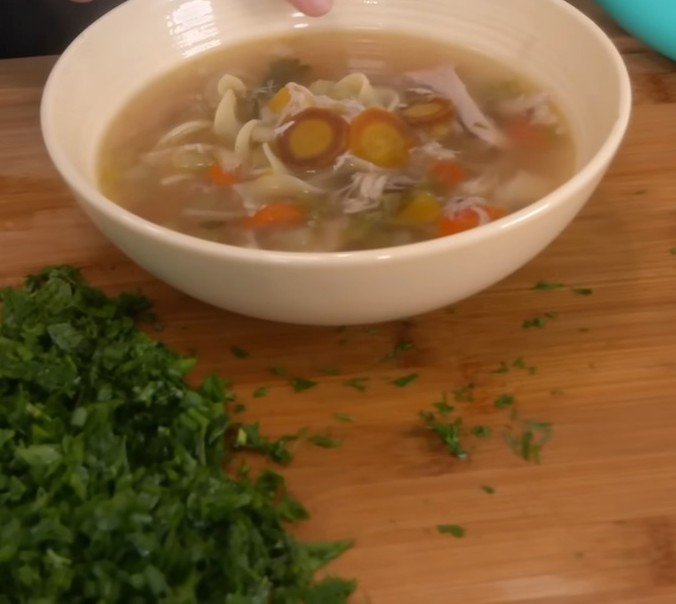
Fresh herbs stirred in at the end lift the entire soup, adding brightness that balances the richness of the roasted chicken stock.
- Reduce the heat to low and stir in the finely minced parsley, dill and chopped chives, letting them infuse the soup for a minute or two without boiling.
- Taste the broth carefully and adjust with additional salt and pepper as needed, remembering that the flavor should be bold but not overly salty because the noodles and chicken will continue to season each bite.
- If the soup feels too thick, thin it with a splash of hot water or additional stock, or if it feels too thin, let it simmer for a few more minutes uncovered to reduce slightly.
Serving the soup soon after adding the fresh herbs preserves their color and fragrance, giving every bowl a clean, aromatic finish that makes the dish feel vibrant rather than heavy.
8. Helpful tips for perfect chicken noodle soup
Treat this section as a practical guide you can refer to each time you make the recipe, especially when adjusting for different kitchens, equipment or ingredients.
One important tip is to respect the low and slow cooking time for the stock, because rushing this stage by boiling too hard or cutting the simmer short will give you a flatter broth that lacks the gentle, rounded flavor people expect from homemade chicken noodle soup. It helps to think of those hours as mostly unattended time, so you can go about your day while the pot quietly does the work on the back burner, only checking occasionally to skim and to ensure the heat stays low enough to avoid a rolling boil.
Another useful guideline is to season in layers instead of waiting until the very end, adding small amounts of salt when roasting the chicken, again when simmering the stock and once more when sautéing the fresh vegetables so the final soup tastes seasoned all the way through rather than salty only in the broth. Still, it is wise to be conservative with salt early on because the long simmer will concentrate flavor as liquid reduces, and you can always adjust more accurately at the end when you taste the finished soup with noodles and herbs.
Controlling texture is also key to a satisfying bowl, particularly when it comes to noodles and vegetables, which should feel tender yet still distinct rather than collapsing into the broth. To achieve that, keep the fresh diced vegetables slightly undercooked when you first sauté them, then let them finish softening in the hot stock, and cook the noodles just until al dente because they will continue to soften as they sit in the hot soup and even more when reheated as leftovers.
Finally, think about how you plan to store and reheat the soup, especially if you are making a large batch to enjoy over several days, because the noodles will keep absorbing broth and swelling over time. For the best texture in leftovers, some cooks prefer to cook and store the noodles separately, ladling hot broth and chicken over them just before serving, while others simply accept thicker, stew like leftovers and thin them with a bit of stock or water when reheating on the stove.
9. Essential Equipment Guide
- Large roasting pan
- Large heavy soup pot or Dutch oven
- Sharp chef’s knife
- Large cutting board
- Ladle for skimming and serving
- Heat resistant tongs
- Large mixing spoon
10. Nutritional Information
Approximate values per serving, assuming about 8 servings and using skinless shredded chicken in the final soup.
| Nutrient | Amount per serving |
|---|---|
| Calories | ~320 |
| Protein | ~28 g |
| Fat | ~12 g |
| Carbohydrates | ~24 g |
| Fiber | ~3 g |
| Sodium | Depends on salt used |
11. Pairings
- Crusty baguette or artisan bread for dipping into the broth
- Simple green salad with a light vinaigrette to balance the richness
- Buttery dinner rolls or soft garlic bread for a heartier meal
- Light white wine or sparkling water with lemon for a refreshing contrast
12. Variations
- Use whole wheat egg noodles for extra fiber and a slightly nuttier flavor
- Add a handful of peas or sweet corn at the end for color and sweetness
- Stir in a squeeze of lemon juice and extra dill for a brighter, more tangy finish
- Swap some of the noodles for cooked rice or small pasta shapes if preferred
13. Recipe timing and yield
- Prep Time: About 25 to 30 minutes for roasting setup, vegetable prep and shredding the chicken.
- Cook Time: About 5 hours total, including 1 1/2 hours to roast the chicken, 3 1/2 hours to simmer the stock and 15 to 20 minutes to finish the soup with noodles and fresh vegetables.
- Servings: Approximately 8 generous servings, depending on bowl size and how much broth you prefer in each portion.

Classic Chicken Noodle Soup Recipe
This cozy chicken noodle soup starts with a deeply flavored homemade stock, then layers in fresh vegetables, herbs and tender egg noodles for a classic, from scratch bowl that tastes even better than takeout. It takes time to simmer but the hands on work is minimal and the long cook turns simple ingredients into a rich, golden broth.
- Total Time: 5 Hr 30 Mins
Ingredients
For the stock
- 4 1/2 lb whole chicken, cleaned
- 3 parsnips, roughly chopped
- 3 carrots, roughly chopped
- 4 stalks of celery, halved
- 2 onions, halved
- 1 head of garlic, halved
- Handful of parsley
- Salt and pepper
- Olive oil
For the remaining soup
- 2 carrots, peeled and diced
- 2 parsnips, peeled and diced
- 2 stalks of celery, diced
- 6 oz egg noodles
- 1/4 cup fresh parsley, finely minced
- 1/4 cup fresh dill, finely minced
- 1/4 cup chopped chives
Instructions
1. Roast the chicken for deeper flavor
Start by building flavor in the stock with roasted chicken and vegetables, which gives the broth a rich, slightly caramelized base.
- Preheat the oven to 425 degrees Fahrenheit and place the cleaned whole chicken in a roasting pan lightly coated with olive oil.
- Drizzle a little olive oil over the chicken, season generously with salt and pepper, and tuck a small sprig of parsley or another herb inside the cavity if you like a more aromatic finish.
- Roast the chicken for about 1 1/2 hours, or until the skin is deep golden and the juices run clear when pierced between the leg and thigh.
Allowing the chicken to roast fully at this stage means you will later shred meat that is already full of roasted flavor, which will make the final soup taste far more complex than if you started with raw chicken poached directly in water.
2. Build the homemade stock
Once the chicken is roasted, it is time to turn it and the aromatic vegetables into a soothing, golden stock.
- Transfer the roasted chicken to a large, heavy pot and add the roughly chopped parsnips, carrots, celery, onions, halved head of garlic and a handful of parsley.
- Drizzle in a bit of olive oil if the pot is very dry, season with salt and pepper, then add enough water to fully cover the chicken and vegetables so they can simmer gently and release their flavor.
- Bring the mixture up to a boil over medium high heat, then immediately lower the heat and keep it at a gentle simmer so the broth stays clear rather than turning cloudy.
This slow, gentle simmer allows the collagen in the chicken and the starches in the root vegetables to break down gradually, resulting in a broth that tastes silky and full without feeling heavy.
3. Simmer low and slow
Time is the secret ingredient that transforms this simple pot into a deeply flavored base for your soup.
- Partially cover the pot with a lid, leaving it slightly ajar to let some steam escape while still preventing too much liquid from evaporating.
- Keep the heat as low as possible while maintaining a gentle simmer and cook the stock for about 3 1/2 hours, checking occasionally to skim any foam or excess fat that may rise to the surface.
- If the liquid reduces too much, top it up with a little hot water so the chicken and vegetables stay mostly submerged and continue to infuse the stock.
By the end of this long cooking time, the chicken will be falling apart and the vegetables will have given their flavor to the liquid, which is exactly what you want because you will use a fresh batch of diced vegetables later for better texture.
4. Strain, skim and shred the chicken
Once the stock is done, the next step is to separate the rich broth from the solids and prepare the meat that will go back into the soup.
- Carefully lift the chicken out of the pot onto a large plate or tray and let it cool until it is comfortable to handle without burning your hands.
- Use a ladle or spoon to skim as much excess fat from the top of the broth as you like, adjusting to your preferred richness level while keeping enough for good mouthfeel.
- Strain out and discard the cooked stock vegetables if you prefer a clearer broth with better texture from the fresh diced vegetables you will add later.
When the chicken is cool enough, remove and discard the skin and bones, then shred the meat into bite sized pieces that will be easy to eat in a spoonful of soup.
5. Sauté the fresh vegetables
Using a fresh batch of diced vegetables ensures the finished soup has a pleasant bite and attractive color instead of overcooked pieces that have simmered for hours.
- In a clean large soup pot, heat a couple of tablespoons of olive oil over medium heat until shimmering.
- Add the diced carrots, parsnips and celery and season lightly with salt and pepper, then cook for about 5 to 7 minutes until they start to soften but still hold their shape.
- Stir occasionally so the vegetables cook evenly and pick up just a hint of color, which adds another layer of subtle sweetness to the broth.
This step echoes traditional soup making where a base of sautéed onion, carrot and celery, often called a mirepoix, forms the flavor backbone of many comforting dishes.
6. Combine broth, vegetables and noodles
Now it is time to bring together the flavorful broth, fresh vegetables and hearty egg noodles to form the body of the soup.
- Pour the skimmed, strained stock into the pot with the sautéed vegetables, making sure there is enough liquid to comfortably cook the noodles and still leave plenty of broth for serving.
- Bring the mixture to a gentle boil, then add the egg noodles and cook them directly in the broth according to package directions until they are tender but not mushy.
- Once the noodles are almost done, add the shredded chicken back to the pot and let it warm through so it absorbs some of the seasoned broth without drying out.
Cooking the noodles in the stock instead of plain water allows them to soak up flavor, but be aware that they will also absorb some of the liquid, so you may want to have a little extra stock or hot water ready if you prefer a soup with more broth.
7. Finish with fresh herbs and adjust seasoning
Fresh herbs stirred in at the end lift the entire soup, adding brightness that balances the richness of the roasted chicken stock.
- Reduce the heat to low and stir in the finely minced parsley, dill and chopped chives, letting them infuse the soup for a minute or two without boiling.
- Taste the broth carefully and adjust with additional salt and pepper as needed, remembering that the flavor should be bold but not overly salty because the noodles and chicken will continue to season each bite.
- If the soup feels too thick, thin it with a splash of hot water or additional stock, or if it feels too thin, let it simmer for a few more minutes uncovered to reduce slightly.
Serving the soup soon after adding the fresh herbs preserves their color and fragrance, giving every bowl a clean, aromatic finish that makes the dish feel vibrant rather than heavy.
- Prep Time: 30 Mins
- Cook Time: 5 Hrs