
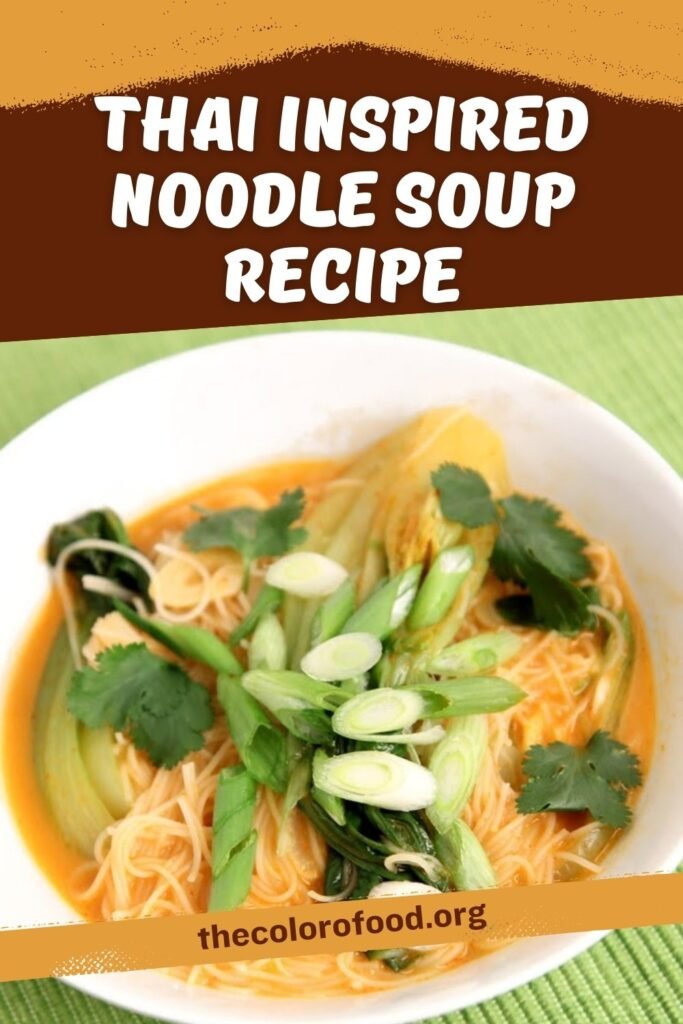
This Thai inspired noodle soup is a quick, aromatic bowl of comfort built on a base of red curry, coconut milk and vegetables, finished with fresh herbs for brightness. It comes together in about fifteen minutes, which makes it ideal for busy weeknights or whenever a light yet satisfying meal is needed.
Ingredients
- 2 Tbsp of vegetable oil
- 2 cloves of garlic, finely chopped
- 1 Tbsp of ginger, minced or grated
- 2 Tbsp of Thai red curry paste
- 1 can (14.5 oz) light coconut milk, well shaken
- 4 cups vegetable stock
- 3 baby bok choy, quartered and washed
- 6 oz thin rice noodles or any other noodle you prefer
- About 1/4 cup fresh cilantro
- Few sprigs fresh mint
- Fresh scallions, finely sliced
1. Prep the Aromatics and Greens

Start by preparing the base flavors, which ensures the soup develops depth in a short cooking time. Finely chop the garlic, then mince or grate the ginger so both can quickly soften in the hot oil and release their aroma. Quarter the baby bok choy lengthwise and rinse it thoroughly, paying attention to the base where grit can hide between the layers. Wash and roughly chop the cilantro, pick the mint leaves from the stems, and finely slice the scallions, keeping them ready for garnishing the finished soup.
Having everything prepped before turning on the heat keeps this recipe smooth because the cooking itself moves very fast. Since the noodles cook directly in the broth, check the cooking time on the noodle package in advance so you can judge exactly when to add them. This mise en place approach mirrors how quick soups are often handled in professional style home kitchens, creating a more relaxed and controlled cooking experience.
2. Build the Flavor Base

Set a medium to large saucepan over medium heat and add the vegetable oil, allowing it to warm gently before adding any aromatics. Once the oil is hot, add the chopped garlic and minced ginger, stirring frequently so they soften and become fragrant without browning too deeply, since burnt garlic can turn the soup bitter. Let them sauté together for a few minutes until you can smell their aroma and they look slightly softened and glossy.
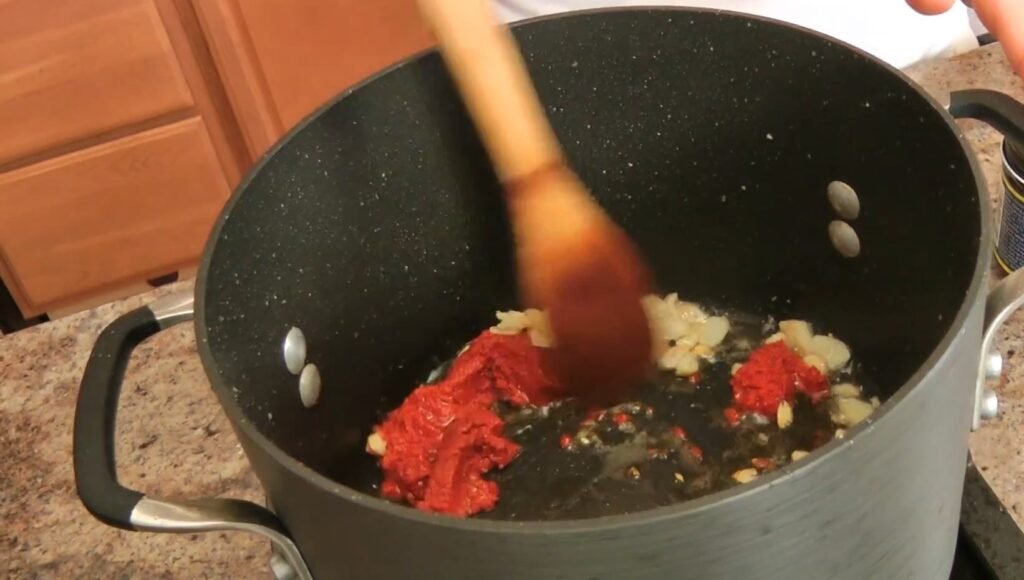
At this stage, add the Thai red curry paste directly to the pan, stirring it into the oil, garlic and ginger so it toasts slightly and blooms in the fat. Allow the paste to cook for a couple of minutes, stirring so it does not stick to the bottom of the pan, because this step intensifies the flavor of the curry paste and creates a more robust, restaurant style broth. You are looking for a thick, fragrant mixture where the curry paste is evenly distributed and the aromatics are coated and vivid in color.
3. Add Broth and Coconut Milk

Once the curry paste has cooked for a few minutes, pour in the vegetable stock, scraping the bottom of the pan with a spoon to lift any flavorful bits into the liquid. Add the well shaken can of light coconut milk, which contributes creaminess and a gentle sweetness that balances the heat and salt of the curry paste. Stir everything together until the broth looks uniform, with no streaks of coconut milk separating from the stock.
Increase the heat to bring the mixture up to a boil, then lower it slightly so it settles into a steady simmer. Allow the soup base to simmer for about 5 minutes, which helps the flavors meld and gives the broth a richer, more cohesive taste even though the total cook time remains quick. During this time, the coconut milk integrates fully with the stock and the curry, turning the liquid a warm, appetizing shade of red orange.
4. Cook the Noodles and Bok Choy
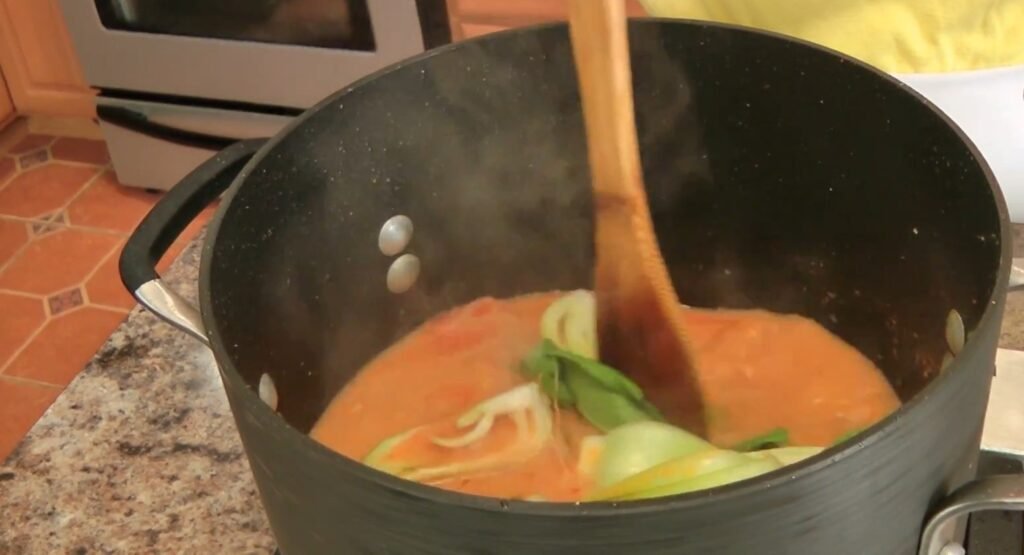
After the broth has simmered, add the thin rice noodles directly to the saucepan, submerging them fully so they soften evenly. Add the quartered baby bok choy at the same time, pushing it down into the broth so both the stems and leafy tops cook properly. Keep the soup at a gentle simmer while the noodles and bok choy cook together.
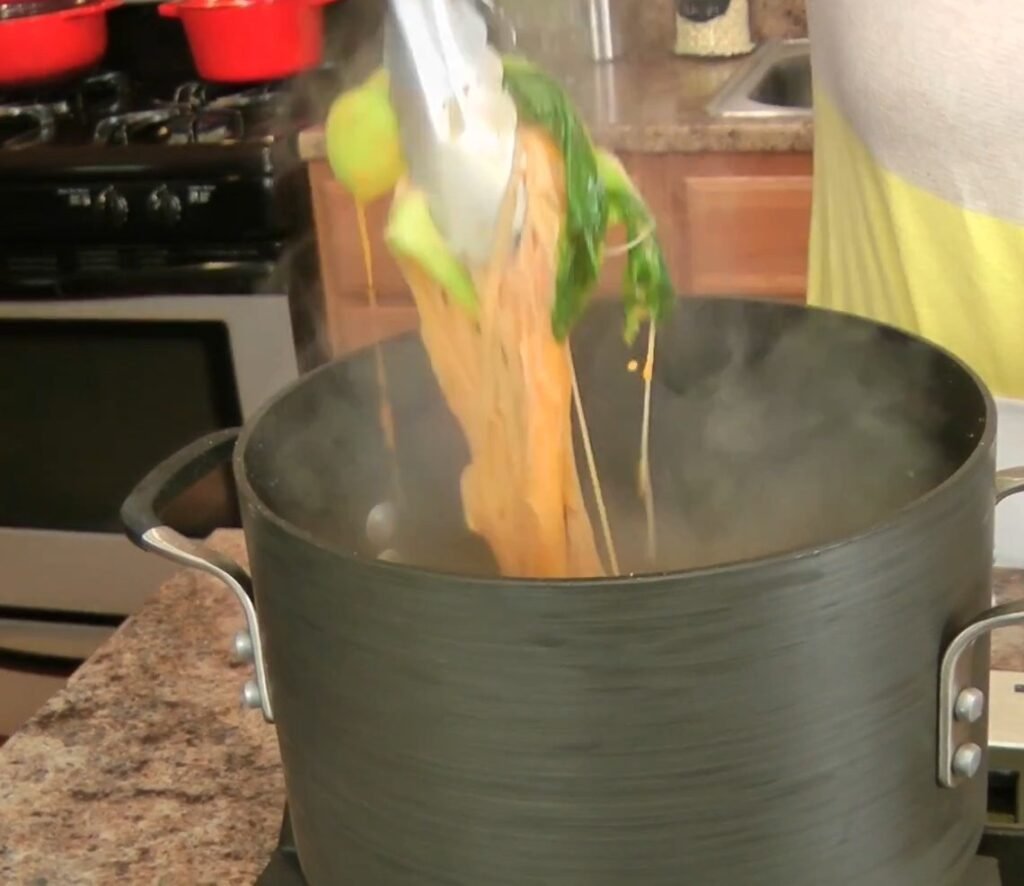
Cook the mixture for about 3 minutes, or until the noodles are tender, adjusting slightly based on the package instructions, as thin rice noodles typically take between 2 to 4 minutes to cook. The bok choy should be crisp tender, with vibrant green leaves and slightly softened pale stems that still retain a bit of bite. Taste a strand of noodle and a piece of bok choy to confirm they are cooked to your preferred texture before moving on.
5. Finish and Serve with Fresh Herbs
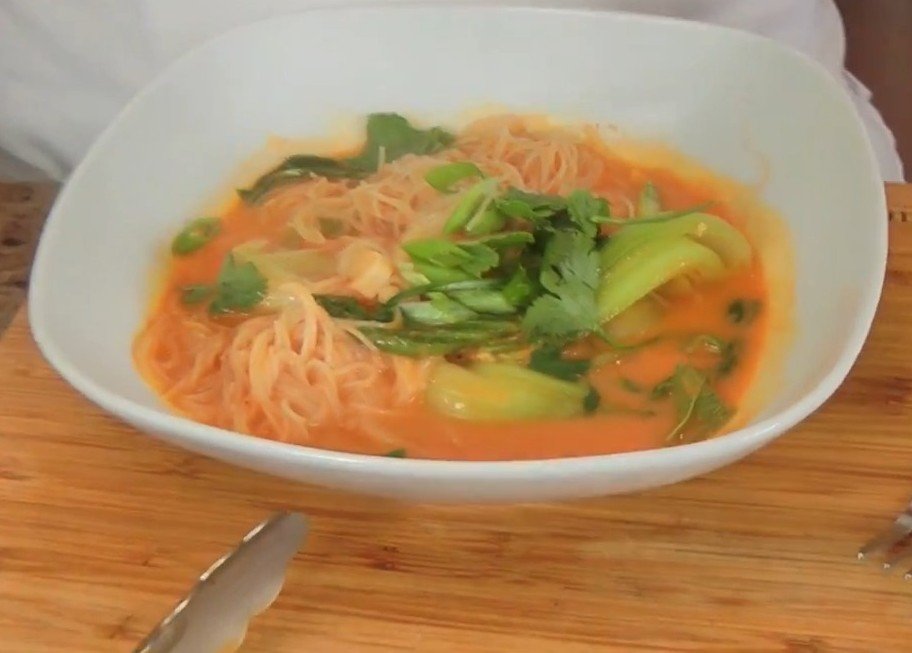
When the noodles and bok choy are cooked, turn off the heat so the vegetables do not overcook and lose their freshness. Ladle the hot soup into bowls, dividing the noodles and bok choy evenly so each serving feels balanced and satisfying. Make sure every bowl gets a generous amount of the curry coconut broth, as that is where much of the character of the dish resides.
Top each bowl with a sprinkle of chopped cilantro, a few fresh mint leaves and a handful of finely sliced scallions. The fresh herbs add brightness, fragrance and a cooling element that contrasts the warm, gently spicy broth. Serve the soup immediately while it is steaming hot so the aromatics from the herbs, curry and coconut milk are at their most vivid and inviting.
6. Tips for the Best Thai Inspired Noodle Soup
For the most flavorful result, focus on coaxing as much depth as possible from the aromatics and curry paste before adding any liquid. Allowing the garlic and ginger to sauté slowly in the oil until fragrant builds a savory foundation, and taking the time to cook the curry paste for a couple of minutes in that same oil enhances its complexity rather than tasting flat or one dimensional. Using vegetable stock instead of water also adds more body and savoriness to the broth, which helps the soup feel complete even without any added protein.
Pay close attention to texture because it can transform a simple soup into something that feels refined. Rice noodles can go from perfectly tender to overly soft very quickly, so check them a minute earlier than the upper range suggested on the package and pull the soup off the heat as soon as they are just cooked. The same care should be given to the bok choy, where the goal is to maintain bright green leaves and stems that still have a pleasant crunch, avoiding the limpness that comes from overcooking.
Balancing flavors is another key aspect, even when following this straightforward formula. Different brands of Thai red curry paste vary in saltiness and heat, so the finished broth can sometimes need a tiny adjustment at the end. If the soup tastes dull, a pinch of salt or a squeeze of lime juice can brighten it, while an extra spoonful of curry paste stirred into the hot broth can increase both heat and depth if you prefer a bolder flavor profile. Conversely, if the soup feels too spicy, adding a splash more coconut milk or a bit of stock can soften the intensity without changing the overall character.
Garnishes are not merely decorative in this dish; they contribute essential layers of freshness and aroma. Cilantro adds an herbal, citrusy note, mint contributes a cooling lift that plays well against the spice, and scallions bring a mild onion flavor that sharpens each bite. Generosity with these toppings can make the soup feel more vibrant and layered, so it is helpful to prepare a bit more than you think you will need and allow diners to add extra to their bowls. Staggering the herbs by adding a small amount to the pot off the heat and more on top in the bowl can also create an even more nuanced finish.
Finally, consider how the noodles behave as the soup sits, because rice noodles continue to absorb liquid, which can thicken the broth and make the noodles too soft if left too long. If you expect leftovers, one helpful approach is to cook the noodles separately in boiling water, then place them in bowls and ladle the hot curry coconut broth and vegetables over them when serving. This method keeps the texture ideal for longer, and allows you to store leftover broth and vegetables without the noodles soaking up all the liquid in the refrigerator.
7. Essential Equipment Guide
- Medium to large saucepan or pot
- Cutting board
- Chef’s knife or sharp kitchen knife
- Wooden spoon or heatproof spatula
- Ladle for serving
- Tongs or fork for handling noodles and bok choy
- Measuring spoons and measuring cup
8. Nutritional Information (Approximate per Serving)
| Nutrient | Amount (per serving, approx.) |
|---|---|
| Calories | 300–350 kcal |
| Carbohydrates | 40–45 g |
| Protein | 6–8 g |
| Fat | 12–16 g |
| Saturated Fat | 6–8 g |
| Fiber | 3–4 g |
| Sodium | Varies by curry paste and stock |
Values are estimated based on typical ingredients for vegetable stock, light coconut milk and rice noodles and standard serving size from the original recipe.
9. Pairings
- Crisp cucumber salad with lime and chili for a refreshing side.
- Simple steamed or stir fried vegetables like broccoli or snap peas for extra greens.
- Light spring rolls with vegetables and herbs to echo the fresh toppings.
- Iced tea, lime soda or coconut water to complement the gentle heat of the soup.
10. Variations
- Use different noodles such as wheat noodles, egg noodles or soba for a change in texture while keeping the broth the same.
- Add tofu cubes or chickpeas during the simmering stage for extra protein while keeping the dish vegetarian.
- Increase or decrease the amount of Thai red curry paste to adjust the heat level to your preference.
- Stir in additional vegetables like mushrooms, bell peppers or snap peas along with the bok choy for a more loaded soup.
11. Time and Servings
- Prep time: 5 minutes
- Cook time: 10 minutes
- Servings: Serves 4
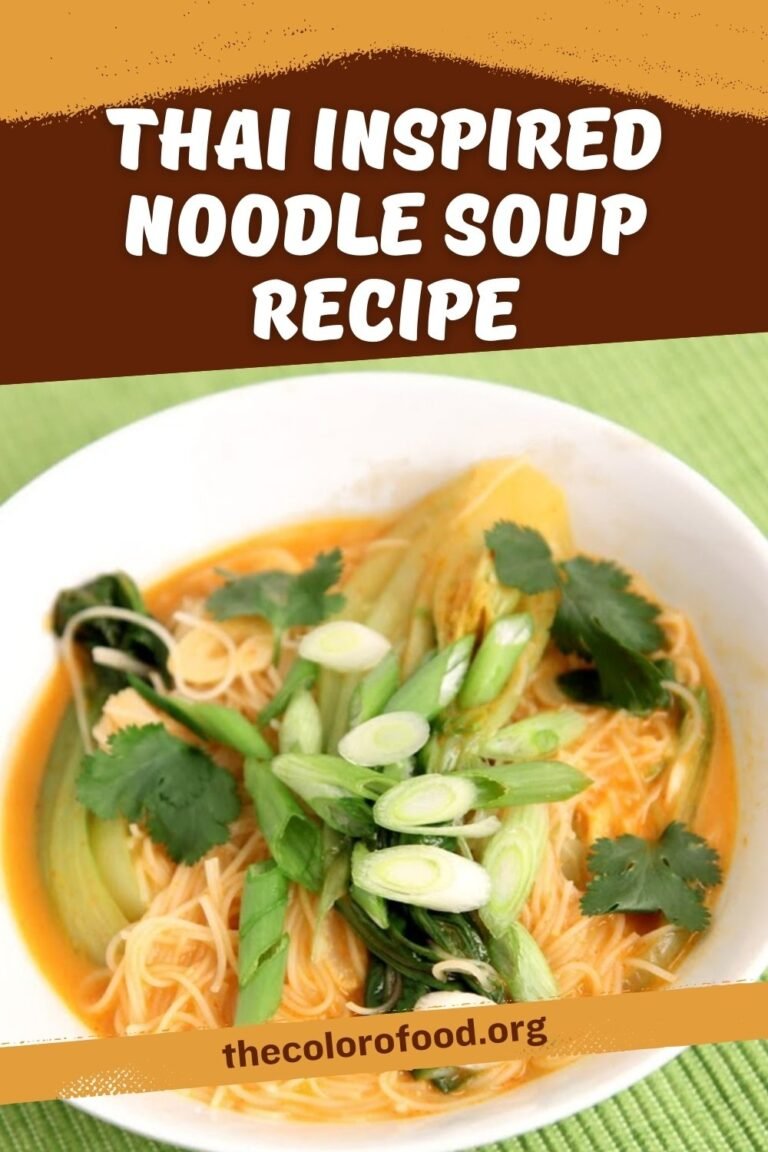
Thai Inspired Noodle Soup Recipe
This Thai inspired noodle soup is a quick, aromatic bowl of comfort built on a base of red curry, coconut milk and vegetables, finished with fresh herbs for brightness. It comes together in about fifteen minutes, which makes it ideal for busy weeknights or whenever a light yet satisfying meal is needed.
- Total Time: 15 Mins
Ingredients
- 2 Tbsp of vegetable oil
- 2 cloves of garlic, finely chopped
- 1 Tbsp of ginger, minced or grated
- 2 Tbsp of Thai red curry paste
- 1 can (14.5 oz) light coconut milk, well shaken
- 4 cups vegetable stock
- 3 baby bok choy, quartered and washed
- 6 oz thin rice noodles or any other noodle you prefer
- About 1/4 cup fresh cilantro
- Few sprigs fresh mint
- Fresh scallions, finely sliced
Instructions
Start by preparing the base flavors, which ensures the soup develops depth in a short cooking time. Finely chop the garlic, then mince or grate the ginger so both can quickly soften in the hot oil and release their aroma. Quarter the baby bok choy lengthwise and rinse it thoroughly, paying attention to the base where grit can hide between the layers. Wash and roughly chop the cilantro, pick the mint leaves from the stems, and finely slice the scallions, keeping them ready for garnishing the finished soup.
Having everything prepped before turning on the heat keeps this recipe smooth because the cooking itself moves very fast. Since the noodles cook directly in the broth, check the cooking time on the noodle package in advance so you can judge exactly when to add them. This mise en place approach mirrors how quick soups are often handled in professional style home kitchens, creating a more relaxed and controlled cooking experience.
2. Build the Flavor Base
Set a medium to large saucepan over medium heat and add the vegetable oil, allowing it to warm gently before adding any aromatics. Once the oil is hot, add the chopped garlic and minced ginger, stirring frequently so they soften and become fragrant without browning too deeply, since burnt garlic can turn the soup bitter. Let them sauté together for a few minutes until you can smell their aroma and they look slightly softened and glossy.
At this stage, add the Thai red curry paste directly to the pan, stirring it into the oil, garlic and ginger so it toasts slightly and blooms in the fat. Allow the paste to cook for a couple of minutes, stirring so it does not stick to the bottom of the pan, because this step intensifies the flavor of the curry paste and creates a more robust, restaurant style broth. You are looking for a thick, fragrant mixture where the curry paste is evenly distributed and the aromatics are coated and vivid in color.
3. Add Broth and Coconut Milk
Once the curry paste has cooked for a few minutes, pour in the vegetable stock, scraping the bottom of the pan with a spoon to lift any flavorful bits into the liquid. Add the well shaken can of light coconut milk, which contributes creaminess and a gentle sweetness that balances the heat and salt of the curry paste. Stir everything together until the broth looks uniform, with no streaks of coconut milk separating from the stock.
Increase the heat to bring the mixture up to a boil, then lower it slightly so it settles into a steady simmer. Allow the soup base to simmer for about 5 minutes, which helps the flavors meld and gives the broth a richer, more cohesive taste even though the total cook time remains quick. During this time, the coconut milk integrates fully with the stock and the curry, turning the liquid a warm, appetizing shade of red orange.
4. Cook the Noodles and Bok Choy
After the broth has simmered, add the thin rice noodles directly to the saucepan, submerging them fully so they soften evenly. Add the quartered baby bok choy at the same time, pushing it down into the broth so both the stems and leafy tops cook properly. Keep the soup at a gentle simmer while the noodles and bok choy cook together.
Cook the mixture for about 3 minutes, or until the noodles are tender, adjusting slightly based on the package instructions, as thin rice noodles typically take between 2 to 4 minutes to cook. The bok choy should be crisp tender, with vibrant green leaves and slightly softened pale stems that still retain a bit of bite. Taste a strand of noodle and a piece of bok choy to confirm they are cooked to your preferred texture before moving on.
5. Finish and Serve with Fresh Herbs
When the noodles and bok choy are cooked, turn off the heat so the vegetables do not overcook and lose their freshness. Ladle the hot soup into bowls, dividing the noodles and bok choy evenly so each serving feels balanced and satisfying. Make sure every bowl gets a generous amount of the curry coconut broth, as that is where much of the character of the dish resides.
Top each bowl with a sprinkle of chopped cilantro, a few fresh mint leaves and a handful of finely sliced scallions. The fresh herbs add brightness, fragrance and a cooling element that contrasts the warm, gently spicy broth. Serve the soup immediately while it is steaming hot so the aromatics from the herbs, curry and coconut milk are at their most vivid and inviting.
- Prep Time: 5 Mins
- Cook Time: 10 Mins