

This Asian sesame chicken salad starts with marinated, pan-seared chicken, gets piled over crunchy greens and slaw, and is finished with a deeply flavorful sesame–ginger dressing and plenty of texture from chow mein noodles and seeds. The steps below walk through marinating, cooking, assembling, and serving so you can recreate the YouTube recipe in written, blog-ready form.
Ingredients
For the chicken
- 4 chicken breasts, pounded evenly to 1/2″ thick
- 2 Tbsp lemon juice
- 2 Tbsp olive oil
- Salt and pepper to taste
- 1 Tbsp garlic and herb seasoning
For the dressing
- 1 clove garlic, grated
- 2 tsp grated ginger
- 1 Tbsp granulated sugar
- 1 1/2 Tbsp soy sauce
- 3 Tbsp rice vinegar
- 1 Tbsp toasted sesame oil
- 4 Tbsp avocado oil
- Pinch of salt
For the salad
- Mixed greens
- Handful of slaw (cabbage/carrot mix)
- Thinly sliced bell peppers
- Thinly sliced cucumber
- Thinly sliced scallions
- Handful of chow mein noodles
- Sesame seeds, for sprinkling
Prepare and marinate the chicken

Start by prepping the chicken so it has time to soak up flavor and tenderize while you work on the rest of the recipe. Place the chicken breasts between two sheets of plastic wrap and pound them until they are an even 1/2 inch thick, which helps them cook quickly and stay juicy.
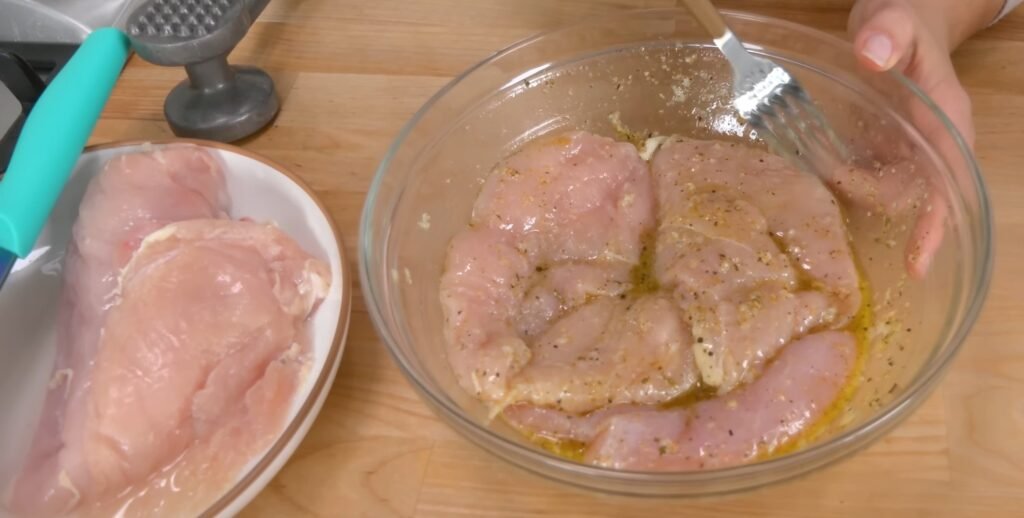
In a medium, relatively snug bowl, whisk together the lemon juice, olive oil, garlic and herb seasoning, and a generous pinch of salt and pepper to create a simple marinade. Add the chicken breasts, turning them so they are well coated, and use a fork to lightly prick the surface in a few places to help the marinade penetrate. Make sure the bowl is not oversized; the chicken should sit nestled in the marinade so the acid and fat can stay in close contact and properly tenderize the meat.
Cover the bowl and refrigerate the chicken for at least 1 to 2 hours, or longer if your schedule allows. During this time, the lemon juice begins to break down the proteins in the lean chicken breast while the oil and seasoning move in, setting you up for tender, flavorful cooked chicken.
Cook and rest the chicken
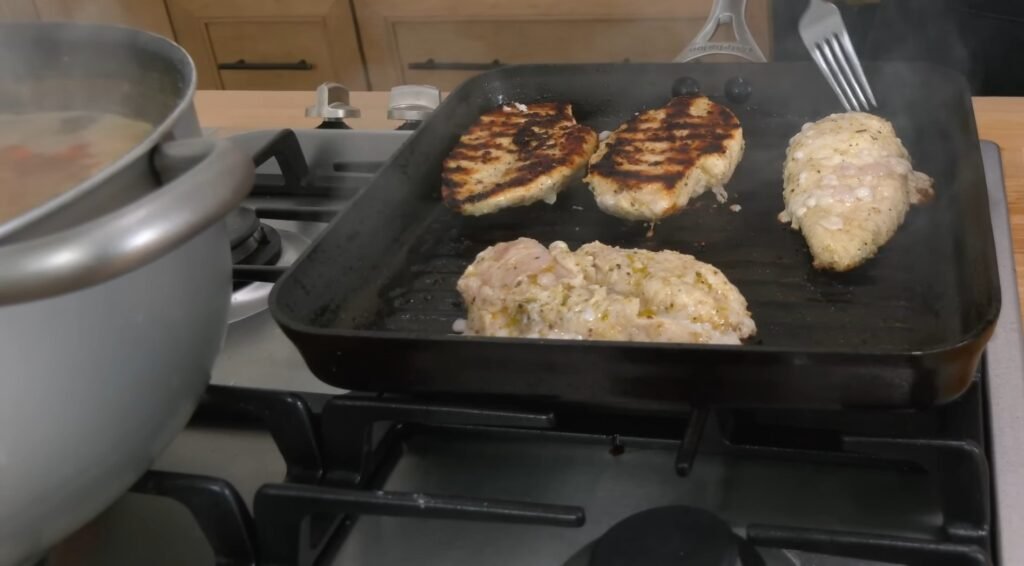
When you are ready to cook, heat a large skillet or grill pan over medium-high heat and let it get nicely hot before adding the chicken. Lightly oil the pan if needed, then lay the marinated chicken breasts in a single layer, shaking off excess marinade as you transfer them.
Cook the chicken on the first side without moving it for about 4 to 5 minutes, depending on the exact thickness, so it can develop good color and a slight crust. Flip each breast once, then cook the second side for another few minutes, just until the chicken is cooked through and the juices run clear or it reaches an internal temperature of about 165°F.
As soon as the chicken is done, transfer it to a shallow bowl or plate instead of leaving it in the hot pan. Cover loosely with foil and let it rest for around 10 minutes so the juices can redistribute throughout the meat and stay inside when you slice it. This resting step keeps the chicken moist, which is particularly important when working with such a lean cut.
Make the sesame–ginger dressing
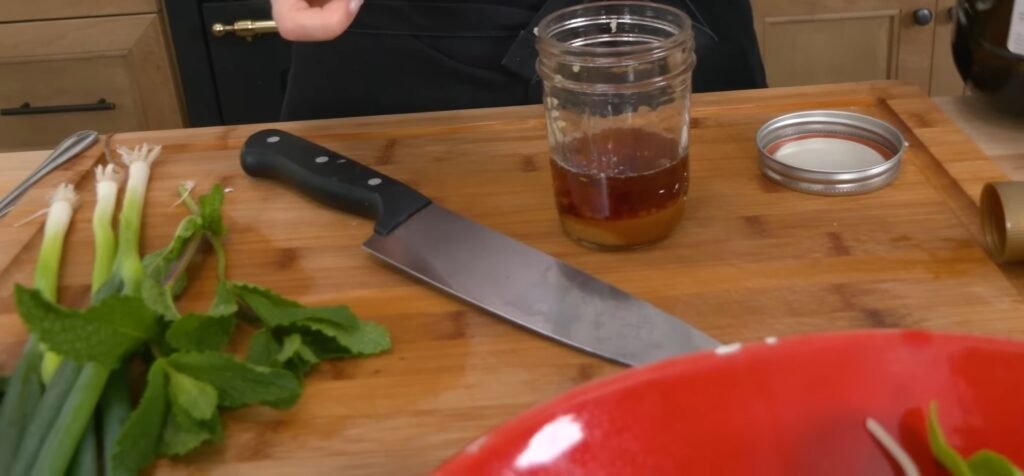
While the chicken is resting, prepare the dressing so the flavors have a moment to meld before you dress the salad. In a small bowl or measuring jug, add the grated garlic, grated ginger, granulated sugar, soy sauce, rice vinegar, toasted sesame oil, avocado oil, and a small pinch of salt.
Whisk the mixture vigorously until the sugar dissolves and the oils are well emulsified, leaving you with a glossy, aromatic dressing that smells strongly of sesame and ginger. Taste a small spoonful and adjust to your liking, adding a touch more sugar for sweetness, vinegar for brightness, or soy sauce for saltiness if needed. Set the dressing aside at room temperature; the garlic and ginger will continue to infuse the liquid and deepen the flavor as it sits.
Assemble the salad base
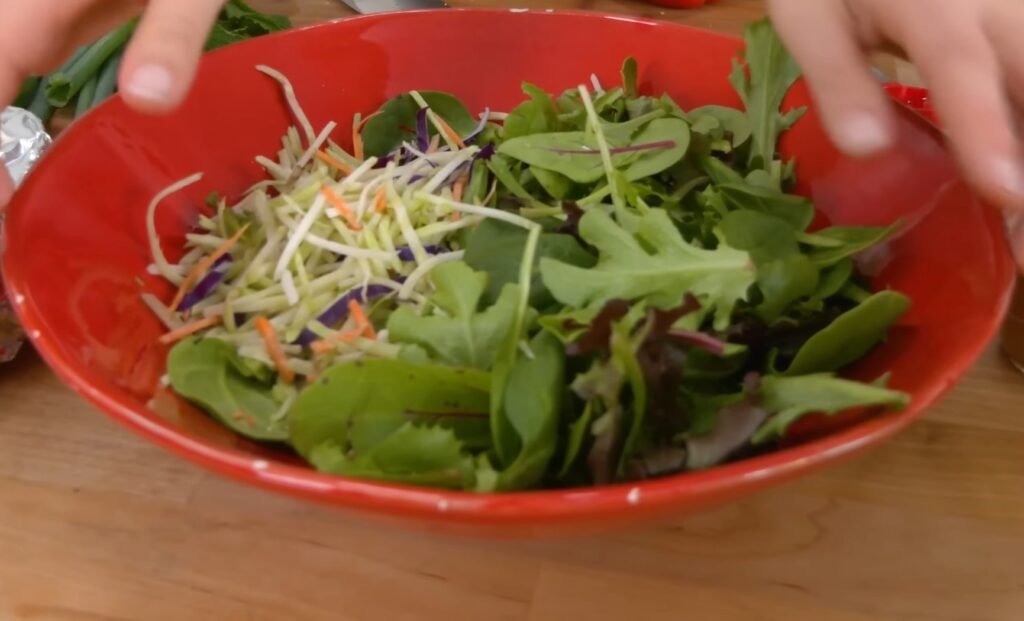
To build the salad, start with a large serving bowl so you have room to toss everything without bruising the greens. Add a generous amount of mixed greens for a leafy base, then scatter in a handful of slaw for extra crunch and color.
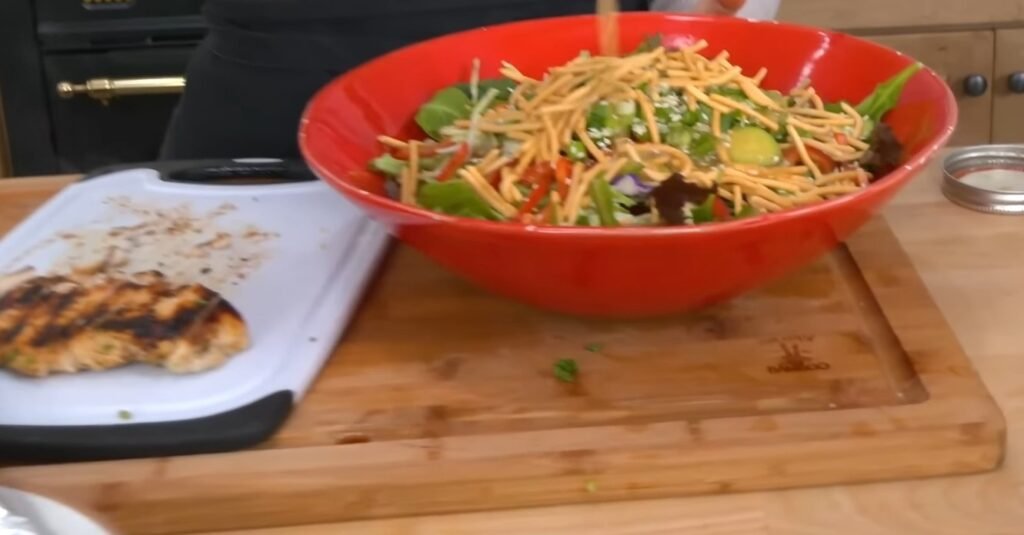
Layer on the thinly sliced bell peppers, cucumber, and scallions, spreading them evenly throughout the bowl so every serving has a variety of vegetables. This mix of soft leaves, crisp cabbage, and juicy vegetables gives the salad lots of texture that will hold up well once dressed. If you are serving later, you can prepare this vegetable base in advance and keep it chilled, adding the chicken, noodles, and dressing closer to mealtime.
Slice the chicken and dress the salad
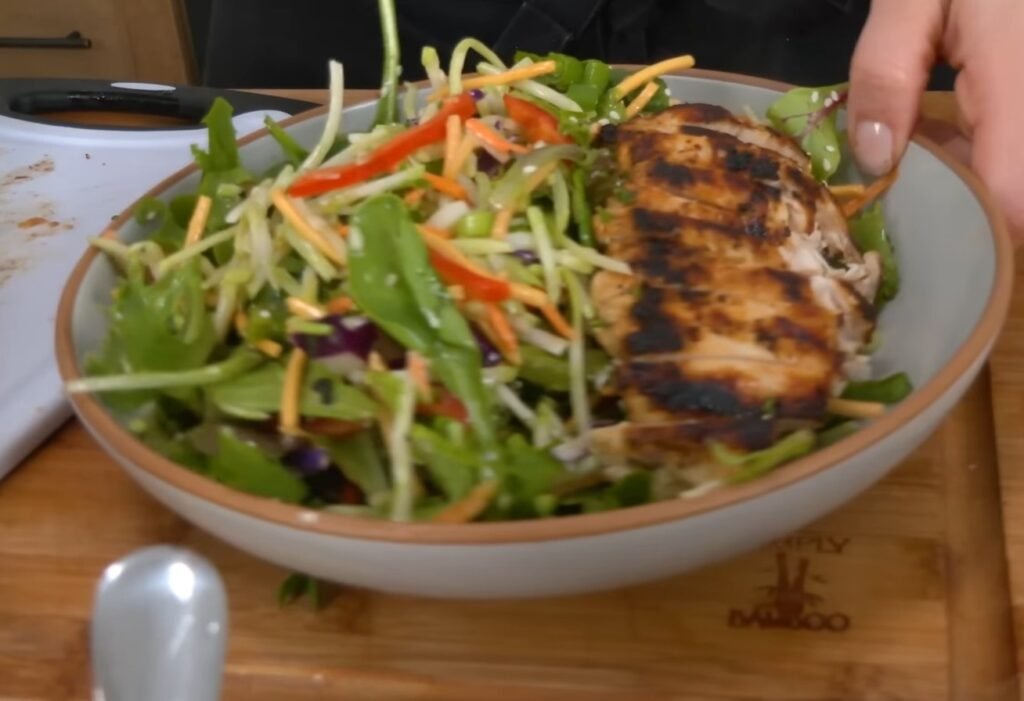
Once the chicken has rested, transfer it to a cutting board and slice it across the grain into strips or bite-sized pieces. Arrange the warm, juicy chicken over the bed of greens and vegetables, either fanning it over the top for a composed look or nestling the slices throughout for a more tossed-style salad.
Drizzle some of the sesame–ginger dressing over the salad, starting with about half and adding more as needed. Use tongs to gently toss everything together so the dressing lightly coats the greens, vegetables, and chicken without weighing them down. If you prefer a more polished presentation, you can toss the greens and vegetables with dressing first, then place the sliced chicken on top and spoon a little extra dressing over the chicken itself.
Finish with crunch and garnish
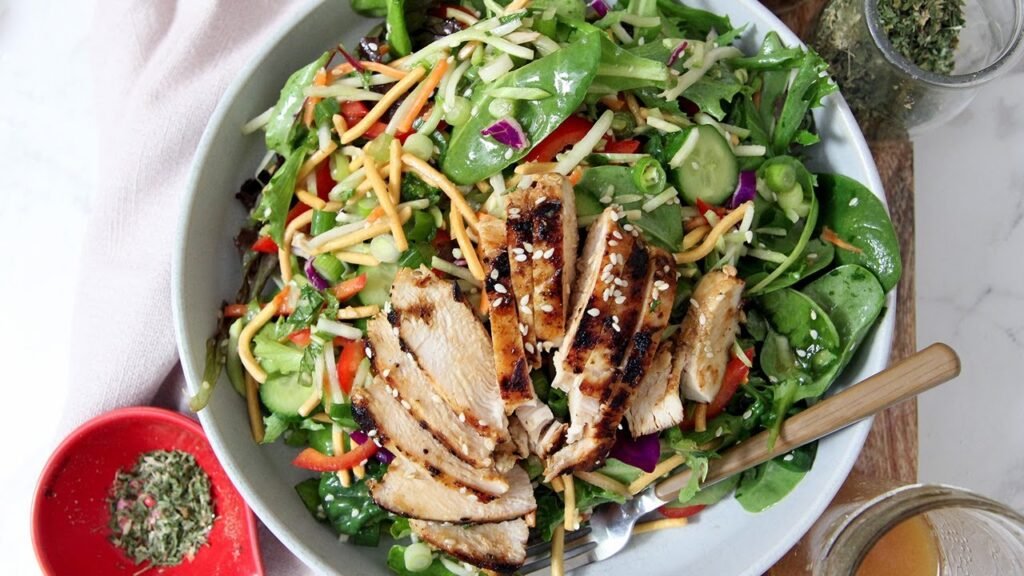
Just before serving, sprinkle a generous handful of chow mein noodles over the salad for a savory, crunchy element that contrasts with the tender chicken and crisp vegetables. Follow with a good shower of sesame seeds, which reinforce the nutty flavor of the toasted sesame oil in the dressing and add a subtle crunch in every bite.
At this point, the salad is ready to serve as a substantial main course for lunch or dinner, offering protein, fresh vegetables, and bold flavor in each bowl. If you like, you can pass any remaining dressing at the table so people can add more to taste, especially if you intentionally dressed the salad lightly to keep the greens from softening too quickly.
Essential Equipment Guide
- Grill pan (for cooking chicken)
- Small jar (for shaking dressing)
- Mixing bowl (for marinating chicken and assembling salad)
Nutritional Information
Approximate values per serving (1/4 of recipe, based on standard ingredient data for similar salads):
| Nutrient | Amount per Serving |
|---|---|
| Calories | 450 kcal |
| Protein | 35g |
| Total Fat | 25g |
| Carbohydrates | 15g |
| Fiber | 3g |
| Sugars | 5g |
Pairings
- Steamed jasmine rice for a complete meal
- Cold soba noodles to complement the crunch
- Fresh spring rolls for added texture
Variations
- Swap chicken for grilled shrimp or tofu for a seafood or vegetarian twist
- Add mandarin oranges and sliced almonds for sweetness and extra crunch
- Use soba noodles instead of chow mein for a gluten-free option
Recipe Timing
- Prep Time: 20 minutes (plus 4 hours marinating)
- Cook Time: 15 minutes
- Servings: 4
Extra tips and variations
For the best texture, keep the chicken breasts an even thickness so they cook at the same rate and stay juicy instead of drying out in thin spots. Using a snug bowl for marinating ensures that the lemon juice and oil fully surround the chicken, which helps with both flavor and tenderness, while pricking the surface with a fork lets the marinade penetrate a little deeper. Letting the chicken rest after cooking is non‑negotiable; skipping this step often leads to dry meat because the juices spill out onto the cutting board instead of staying inside the slices.
The dressing is easy to customize depending on your preferences and what you have on hand. Extra ginger will give it more warmth, while a little more sugar or a drizzle of honey leans it toward a sweeter, restaurant-style Asian salad dressing; if you prefer more tang, add a splash more rice vinegar and balance it with a pinch of sugar as needed. Toasted sesame oil is quite strong, so start with the suggested amount and increase only slightly if you want a more pronounced sesame flavor, since too much can easily overpower the other ingredients.
The vegetable mix and toppings are flexible as well, so you can adapt them to what is in your fridge while keeping the overall spirit of the salad intact. Shredded carrots, thinly sliced red cabbage, or even edamame can join the mix for more color and crunch, and you can swap chow mein noodles for crispy wonton strips or even toasted nuts if you prefer a different type of crunch. This versatility makes the salad easy to scale up for a crowd or adjust for different tastes, while the core combination of marinated chicken and sesame–ginger dressing remains the star of the dish.
Print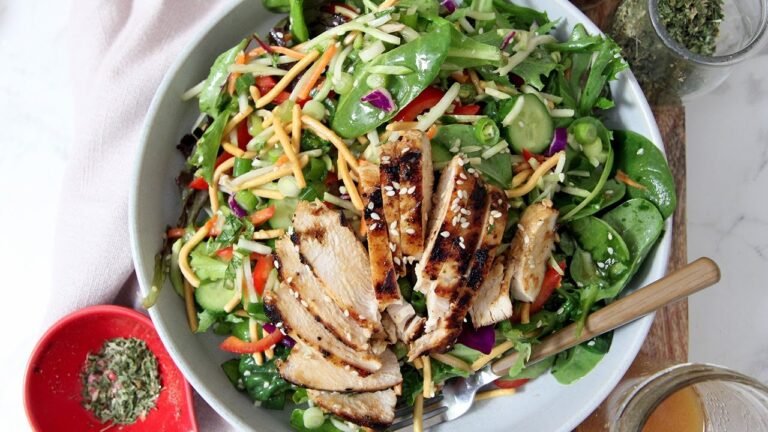
Healthy Asian Sesame Chicken Salad Recipe You’ll Make on Repeat
This Asian sesame chicken salad starts with marinated, pan-seared chicken, gets piled over crunchy greens and slaw, and is finished with a deeply flavorful sesame–ginger dressing and plenty of texture from chow mein noodles and seeds. The steps below walk through marinating, cooking, assembling, and serving so you can recreate the YouTube recipe in written, blog-ready form.
- Total Time: 35 Mins
Ingredients
For the chicken
- 4 chicken breasts, pounded evenly to 1/2″ thick
- 2 Tbsp lemon juice
- 2 Tbsp olive oil
- Salt and pepper to taste
- 1 Tbsp garlic and herb seasoning
For the dressing
- 1 clove garlic, grated
- 2 tsp grated ginger
- 1 Tbsp granulated sugar
- 1 1/2 Tbsp soy sauce
- 3 Tbsp rice vinegar
- 1 Tbsp toasted sesame oil
- 4 Tbsp avocado oil
- Pinch of salt
For the salad
- Mixed greens
- Handful of slaw (cabbage/carrot mix)
- Thinly sliced bell peppers
- Thinly sliced cucumber
- Thinly sliced scallions
- Handful of chow mein noodles
- Sesame seeds, for sprinkling
Instructions
Start by prepping the chicken so it has time to soak up flavor and tenderize while you work on the rest of the recipe. Place the chicken breasts between two sheets of plastic wrap and pound them until they are an even 1/2 inch thick, which helps them cook quickly and stay juicy.
In a medium, relatively snug bowl, whisk together the lemon juice, olive oil, garlic and herb seasoning, and a generous pinch of salt and pepper to create a simple marinade. Add the chicken breasts, turning them so they are well coated, and use a fork to lightly prick the surface in a few places to help the marinade penetrate. Make sure the bowl is not oversized; the chicken should sit nestled in the marinade so the acid and fat can stay in close contact and properly tenderize the meat.
Cover the bowl and refrigerate the chicken for at least 1 to 2 hours, or longer if your schedule allows. During this time, the lemon juice begins to break down the proteins in the lean chicken breast while the oil and seasoning move in, setting you up for tender, flavorful cooked chicken.
Cook and rest the chicken
When you are ready to cook, heat a large skillet or grill pan over medium-high heat and let it get nicely hot before adding the chicken. Lightly oil the pan if needed, then lay the marinated chicken breasts in a single layer, shaking off excess marinade as you transfer them.
Cook the chicken on the first side without moving it for about 4 to 5 minutes, depending on the exact thickness, so it can develop good color and a slight crust. Flip each breast once, then cook the second side for another few minutes, just until the chicken is cooked through and the juices run clear or it reaches an internal temperature of about 165°F.
As soon as the chicken is done, transfer it to a shallow bowl or plate instead of leaving it in the hot pan. Cover loosely with foil and let it rest for around 10 minutes so the juices can redistribute throughout the meat and stay inside when you slice it. This resting step keeps the chicken moist, which is particularly important when working with such a lean cut.
Make the sesame–ginger dressing
While the chicken is resting, prepare the dressing so the flavors have a moment to meld before you dress the salad. In a small bowl or measuring jug, add the grated garlic, grated ginger, granulated sugar, soy sauce, rice vinegar, toasted sesame oil, avocado oil, and a small pinch of salt.
Whisk the mixture vigorously until the sugar dissolves and the oils are well emulsified, leaving you with a glossy, aromatic dressing that smells strongly of sesame and ginger. Taste a small spoonful and adjust to your liking, adding a touch more sugar for sweetness, vinegar for brightness, or soy sauce for saltiness if needed. Set the dressing aside at room temperature; the garlic and ginger will continue to infuse the liquid and deepen the flavor as it sits.
Assemble the salad base
To build the salad, start with a large serving bowl so you have room to toss everything without bruising the greens. Add a generous amount of mixed greens for a leafy base, then scatter in a handful of slaw for extra crunch and color.
Layer on the thinly sliced bell peppers, cucumber, and scallions, spreading them evenly throughout the bowl so every serving has a variety of vegetables. This mix of soft leaves, crisp cabbage, and juicy vegetables gives the salad lots of texture that will hold up well once dressed. If you are serving later, you can prepare this vegetable base in advance and keep it chilled, adding the chicken, noodles, and dressing closer to mealtime.
Slice the chicken and dress the salad
Once the chicken has rested, transfer it to a cutting board and slice it across the grain into strips or bite-sized pieces. Arrange the warm, juicy chicken over the bed of greens and vegetables, either fanning it over the top for a composed look or nestling the slices throughout for a more tossed-style salad.
Drizzle some of the sesame–ginger dressing over the salad, starting with about half and adding more as needed. Use tongs to gently toss everything together so the dressing lightly coats the greens, vegetables, and chicken without weighing them down. If you prefer a more polished presentation, you can toss the greens and vegetables with dressing first, then place the sliced chicken on top and spoon a little extra dressing over the chicken itself.
Finish with crunch and garnish
Just before serving, sprinkle a generous handful of chow mein noodles over the salad for a savory, crunchy element that contrasts with the tender chicken and crisp vegetables. Follow with a good shower of sesame seeds, which reinforce the nutty flavor of the toasted sesame oil in the dressing and add a subtle crunch in every bite.
At this point, the salad is ready to serve as a substantial main course for lunch or dinner, offering protein, fresh vegetables, and bold flavor in each bowl. If you like, you can pass any remaining dressing at the table so people can add more to taste, especially if you intentionally dressed the salad lightly to keep the greens from softening too quickly.
- Prep Time: 20 Mins
- Cook Time: 15 Mins