

This pepperoni bread is a rolled, cheese‑stuffed loaf made from pizza dough layered with American cheese, mozzarella, pepperoni, and Italian‑style seasoning, then baked until golden and bubbly. It makes an easy party appetizer, game‑day snack, or “pizza night” twist that slices beautifully for sharing.
Ingredients
- 1 ball pizza dough (about 1 lb)
- About 1/2 lb sliced American cheese
- 1 cup shredded mozzarella cheese
- 1 pack pepperoni, about 8 oz
- Freshly grated Parmigiano Reggiano, to taste
- 1 Tbsp pizza seasoning (Italian herb and spice blend)
- Flour, for dusting the counter (optional but helpful)
- Parchment paper, for lining the baking sheet
Step 1: Prep the oven and pan
Start by heating the oven to 400°F (about 200°C), which gives the dough a strong blast of heat so it puffs and browns nicely. Line a large baking sheet with parchment paper to prevent sticking and make cleanup simple, setting it aside while you work with the dough. If your kitchen is cool, let the dough sit at room temperature for 20 to 30 minutes so it relaxes and becomes easier to stretch.
Step 2: Prepare and relax the dough

Lightly flour your work surface and place the 1 lb ball of pizza dough on top, dusting it with a little flour so it does not cling to your hands. Shake off excess flour, then begin pressing the dough out into a rough rectangle with your fingertips, gently pushing from the center toward the edges. The aim is a fairly even thickness with no thick rim, because the entire surface will be filled and rolled instead of shaped like a traditional pizza.
Step 3: Roll the dough into a rectangle
Continue stretching the dough using your hands, lifting it carefully and allowing gravity to help it lengthen, similar to stretching pizza dough, then laying it back on the counter and smoothing the edges. If you prefer, you can use a rolling pin to speed things up, rolling from the center outward until you have a large, even rectangle that is thin but not transparent. The warmth of your hands helps relax the gluten, so work slowly; if the dough springs back, pause for a few minutes and then continue stretching.
Step 4: Layer the American cheese
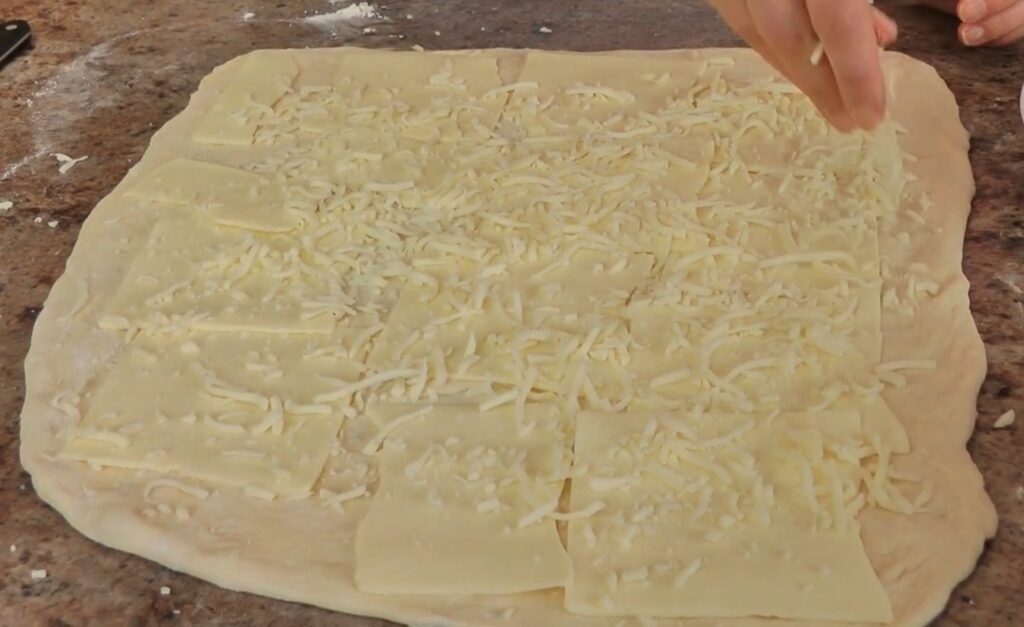
Once the dough rectangle is ready, begin covering the surface with slices of American cheese, leaving just a very small border along the far edge to help the seam seal later. Arrange the slices so they slightly overlap and form a solid blanket of cheese, as this creamy base is what gives the bread its rich, almost sauce‑like interior. The American cheese brings a smooth, melty texture and pronounced cheesy flavor, so do not be shy; this is meant to be indulgent rather than light.
Step 5: Add mozzarella and Parmigiano
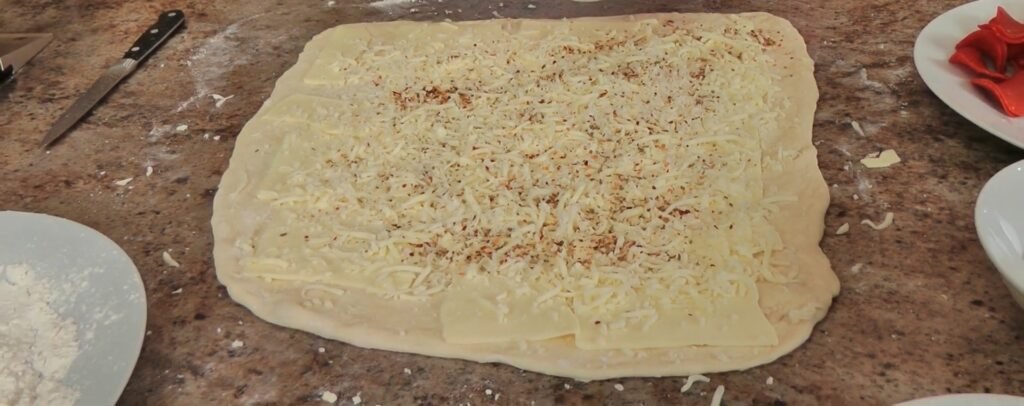
Sprinkle the shredded mozzarella evenly over the American cheese, using about 1 cup to add that classic stretchy, stringy pull when you slice into the finished loaf. Follow with a generous handful or two of freshly grated Parmigiano Reggiano, scattering it across the surface to add sharp, salty depth that balances the richness of the other cheeses. Try to keep the layers even so every slice ends up with a consistent mix of creamy and stretchy cheese.
Step 6: Season with pizza spice blend
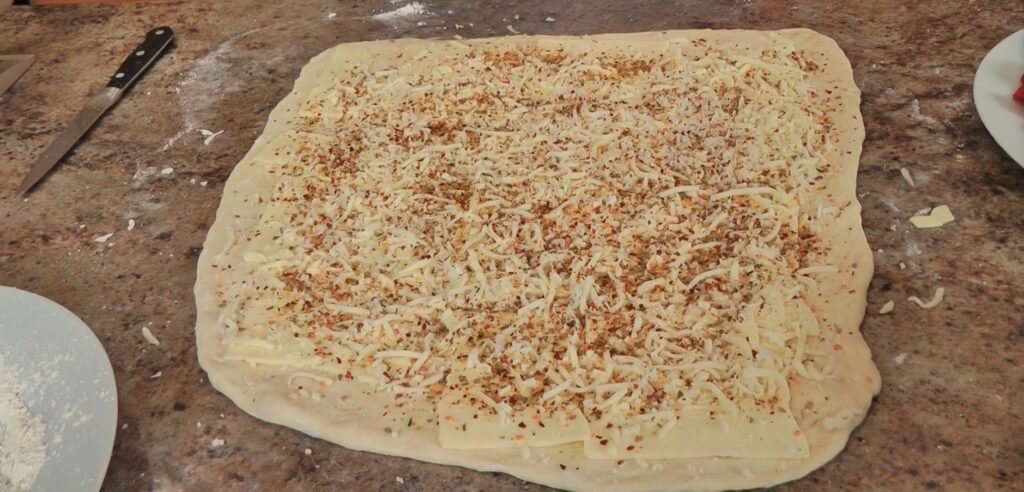
Next, dust the top of the cheese with about 1 tablespoon of pizza seasoning, an all‑purpose mix usually containing dried oregano, garlic, chili flakes, and other Italian‑style herbs and spices. This seasoning gives the bread a familiar pizzeria aroma, tying the flavors together so every bite tastes like a cross between pepperoni pizza and a soft cheese‑filled roll. If your blend is salty, use a light hand; if it is mild, you can be a bit more generous or supplement with extra dried oregano and a pinch of chili flakes.
Step 7: Blanket with pepperoni
Lay slices of pepperoni all across the surface, covering the cheese almost completely so there are only small gaps between slices. You can use classic pork pepperoni or turkey pepperoni if you prefer something slightly leaner, but the key is to create a dense, even layer so every slice of bread includes plenty of meat. Take the pepperoni almost to the edges, keeping only a thin bare strip at the top edge where the final seam will close.
Step 8: Roll the loaf jelly‑roll style
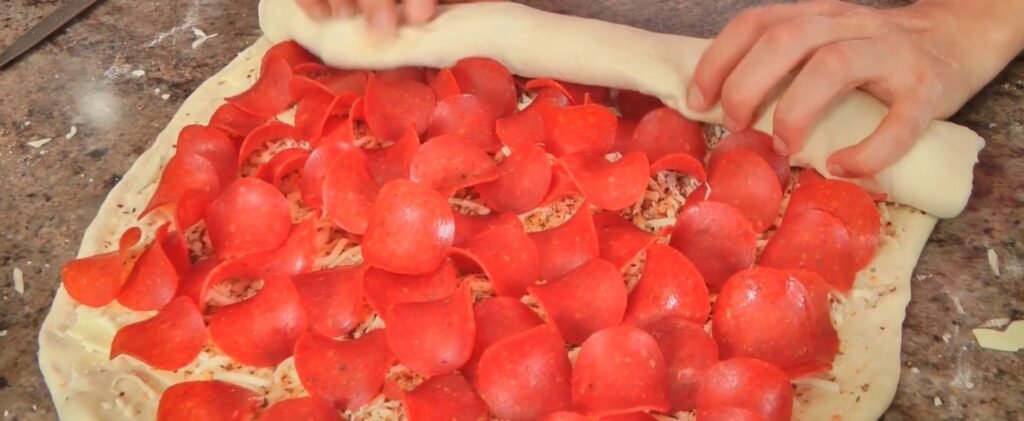
To form the bread, start rolling from the long side closest to you, lifting the edge of the dough and gently tucking it over the filling, then continuing to roll tightly away from you like a jelly roll. As you roll, use your hands to keep the log compact without squeezing out the cheese or pepperoni, nudging any escaping slices back into the center as you go. When you reach the far edge, pinch the seam firmly to seal, then pinch and fold the ends under so the filling is enclosed and less likely to leak during baking.
Step 9: Transfer, score, and bake
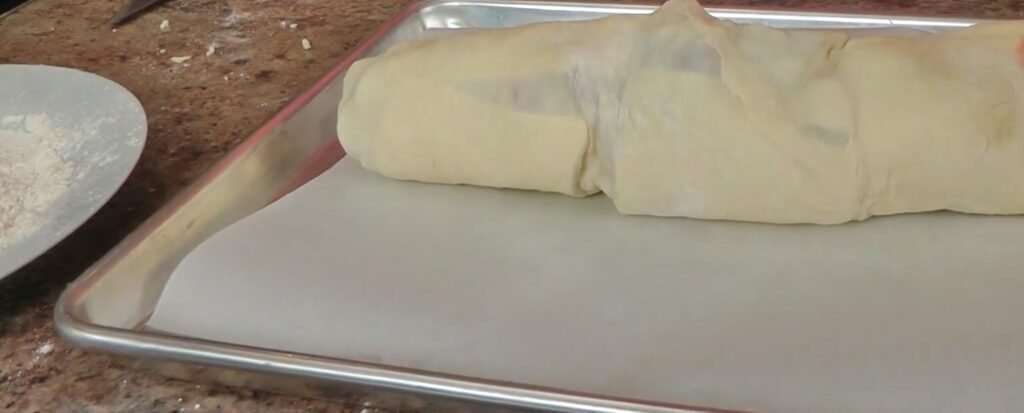
Carefully transfer the rolled loaf seam‑side down onto the parchment‑lined baking sheet, using your hands or a bench scraper to support it if needed. With a small sharp knife, make a few shallow diagonal slits along the top of the loaf to allow steam to escape, which helps prevent tearing and gives a rustic appearance. Slide the tray into the preheated 400°F oven and bake for about 25 to 30 minutes, or until the bread is a deep golden brown and you can see hints of bubbling cheese near the slits.
Step 10: Rest, slice, and serve

When the pepperoni bread is done, remove it from the oven and let it rest on the baking sheet for at least 10 minutes; the interior will be extremely hot and needs a moment to set. Resting allows the melted cheese to thicken slightly so it does not immediately spill out when you cut, giving you neater slices and better presentation. After resting, use a serrated knife to cut the loaf into thick slices and serve warm, either on its own or with a simple bowl of marinara sauce for dipping.
Extra tips for perfect pepperoni bread
For best texture, use pizza dough that has already completed its first rise, which gives a light, airy crumb without needing extra proofing once it is shaped. If you are working with store‑bought dough, a short rest on the counter softens the dough, making stretching easy and reducing the risk of tearing when you roll around a heavy filling. When layering the cheese and pepperoni, keep the layers even and avoid piling too much near the edges, as overfilling can make the dough split or leak in the oven.
Using both American cheese and mozzarella is deliberate: the American cheese melts into a smooth, almost saucy layer that soaks into the dough, while mozzarella contributes that familiar stretchy pull without dominating the flavor. Parmigiano Reggiano is added for its salty, nutty depth, so grating it fresh and sprinkling a light but thorough layer gives you flavor in every bite without making the bread overly salty. If you enjoy more spice, you can choose a pizza seasoning that includes extra chili flakes or add a pinch of your own on top of the cheese before rolling.
When rolling the loaf, aim for a tight, uniform cylinder, since loose rolling can create large air pockets where cheese can pool and then burst through the crust while baking. Pinching the seam and tucking the ends securely underneath are small steps that greatly reduce leakage and help the loaf hold its shape in the oven. The slits on top are equally important because they guide steam out through controlled openings rather than letting it search for weak spots in the dough.
Baking directly on a parchment‑lined sheet at a hot 400°F ensures the bottom gets nicely browned while the inside cooks through; if your oven runs cool, you may need a couple extra minutes, but watch the color closely. Once baked, resist the urge to cut immediately, since slicing too soon can make cheese and oil rush out, leaving the remaining portion less gooey and more greasy on the tray. Allowing that short cooling time keeps the filling inside the bread, so each slice shows clear spirals of dough, cheese, and pepperoni when served.
Essential Equipment Guide
Nutritional Information
This pepperoni bread uses pizza dough, American cheese, mozzarella, pepperoni, Parmesan, and pizza seasoning. Approximate values per serving (based on 8 servings) are shown below, derived from standard ingredient nutrition data.
| Nutrient | Amount per Serving |
|---|---|
| Calories | 450-550 |
| Protein | 20-25g |
| Carbohydrates | 35-45g |
| Fat | 25-35g |
| Sodium | 1000-1200mg |
Pairings
- Marinara sauce for dipping enhances the cheesy, savory flavors.
- Italian salad balances the richness with fresh greens.
- Chianti or light red wine complements the pepperoni spice.
Variations
- Use turkey pepperoni for a lighter option.
- Add sliced olives or bell peppers for extra texture.
- Swap American cheese for provolone for sharper taste.
Recipe Timing
Servings: 6 to 8
Print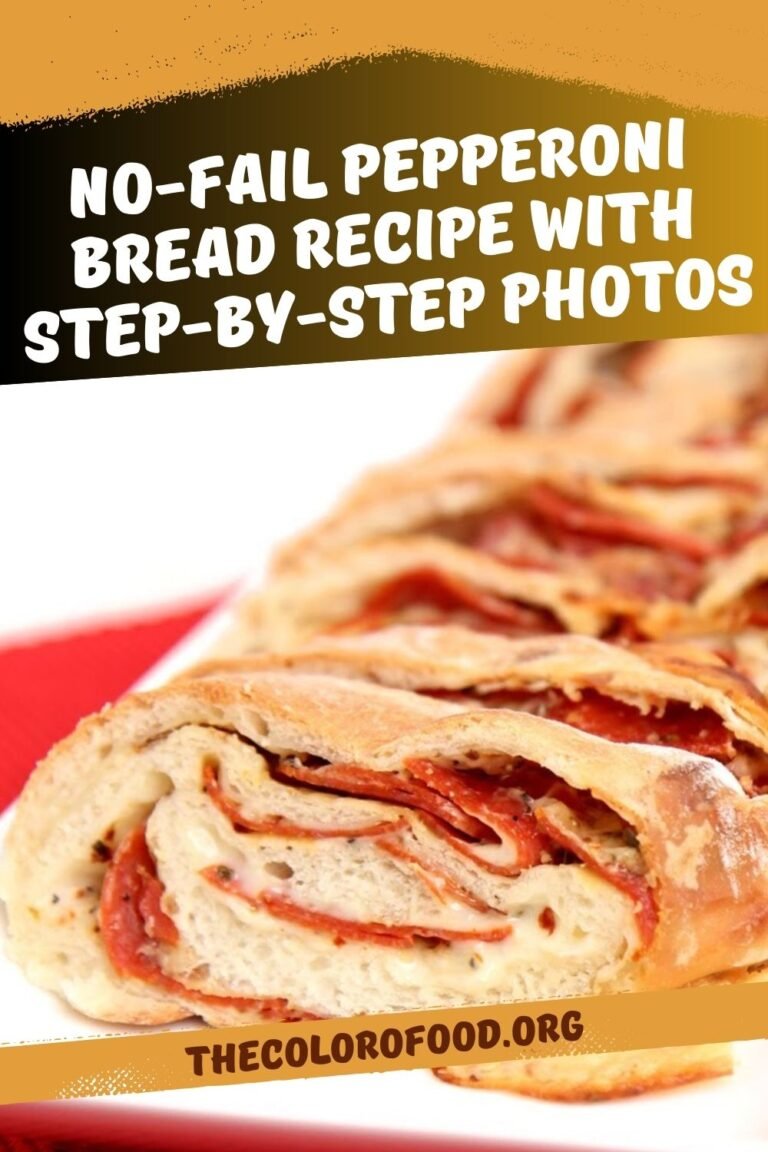
No-Fail Pepperoni Bread Recipe with Step-by-Step Photos
This pepperoni bread is a rolled, cheese‑stuffed loaf made from pizza dough layered with American cheese, mozzarella, pepperoni, and Italian‑style seasoning, then baked until golden and bubbly. It makes an easy party appetizer, game‑day snack, or “pizza night” twist that slices beautifully for sharing.
- Total Time: 45 Mins
Ingredients
- 1 ball pizza dough (about 1 lb)
- About 1/2 lb sliced American cheese
- 1 cup shredded mozzarella cheese
- 1 pack pepperoni, about 8 oz
- Freshly grated Parmigiano Reggiano, to taste
- 1 Tbsp pizza seasoning (Italian herb and spice blend)
- Flour, for dusting the counter (optional but helpful)
- Parchment paper, for lining the baking sheet
Instructions
Start by heating the oven to 400°F (about 200°C), which gives the dough a strong blast of heat so it puffs and browns nicely. Line a large baking sheet with parchment paper to prevent sticking and make cleanup simple, setting it aside while you work with the dough. If your kitchen is cool, let the dough sit at room temperature for 20 to 30 minutes so it relaxes and becomes easier to stretch.
Step 2: Prepare and relax the doughLightly flour your work surface and place the 1 lb ball of pizza dough on top, dusting it with a little flour so it does not cling to your hands. Shake off excess flour, then begin pressing the dough out into a rough rectangle with your fingertips, gently pushing from the center toward the edges. The aim is a fairly even thickness with no thick rim, because the entire surface will be filled and rolled instead of shaped like a traditional pizza.
Step 3: Roll the dough into a rectangleContinue stretching the dough using your hands, lifting it carefully and allowing gravity to help it lengthen, similar to stretching pizza dough, then laying it back on the counter and smoothing the edges. If you prefer, you can use a rolling pin to speed things up, rolling from the center outward until you have a large, even rectangle that is thin but not transparent. The warmth of your hands helps relax the gluten, so work slowly; if the dough springs back, pause for a few minutes and then continue stretching.
Step 4: Layer the American cheeseOnce the dough rectangle is ready, begin covering the surface with slices of American cheese, leaving just a very small border along the far edge to help the seam seal later. Arrange the slices so they slightly overlap and form a solid blanket of cheese, as this creamy base is what gives the bread its rich, almost sauce‑like interior. The American cheese brings a smooth, melty texture and pronounced cheesy flavor, so do not be shy; this is meant to be indulgent rather than light.
Step 5: Add mozzarella and ParmigianoSprinkle the shredded mozzarella evenly over the American cheese, using about 1 cup to add that classic stretchy, stringy pull when you slice into the finished loaf. Follow with a generous handful or two of freshly grated Parmigiano Reggiano, scattering it across the surface to add sharp, salty depth that balances the richness of the other cheeses. Try to keep the layers even so every slice ends up with a consistent mix of creamy and stretchy cheese.
Step 6: Season with pizza spice blendNext, dust the top of the cheese with about 1 tablespoon of pizza seasoning, an all‑purpose mix usually containing dried oregano, garlic, chili flakes, and other Italian‑style herbs and spices. This seasoning gives the bread a familiar pizzeria aroma, tying the flavors together so every bite tastes like a cross between pepperoni pizza and a soft cheese‑filled roll. If your blend is salty, use a light hand; if it is mild, you can be a bit more generous or supplement with extra dried oregano and a pinch of chili flakes.
Step 7: Blanket with pepperoniLay slices of pepperoni all across the surface, covering the cheese almost completely so there are only small gaps between slices. You can use classic pork pepperoni or turkey pepperoni if you prefer something slightly leaner, but the key is to create a dense, even layer so every slice of bread includes plenty of meat. Take the pepperoni almost to the edges, keeping only a thin bare strip at the top edge where the final seam will close.
Step 8: Roll the loaf jelly‑roll styleTo form the bread, start rolling from the long side closest to you, lifting the edge of the dough and gently tucking it over the filling, then continuing to roll tightly away from you like a jelly roll. As you roll, use your hands to keep the log compact without squeezing out the cheese or pepperoni, nudging any escaping slices back into the center as you go. When you reach the far edge, pinch the seam firmly to seal, then pinch and fold the ends under so the filling is enclosed and less likely to leak during baking.
Step 9: Transfer, score, and bakeCarefully transfer the rolled loaf seam‑side down onto the parchment‑lined baking sheet, using your hands or a bench scraper to support it if needed. With a small sharp knife, make a few shallow diagonal slits along the top of the loaf to allow steam to escape, which helps prevent tearing and gives a rustic appearance. Slide the tray into the preheated 400°F oven and bake for about 25 to 30 minutes, or until the bread is a deep golden brown and you can see hints of bubbling cheese near the slits.
Step 10: Rest, slice, and serveWhen the pepperoni bread is done, remove it from the oven and let it rest on the baking sheet for at least 10 minutes; the interior will be extremely hot and needs a moment to set. Resting allows the melted cheese to thicken slightly so it does not immediately spill out when you cut, giving you neater slices and better presentation. After resting, use a serrated knife to cut the loaf into thick slices and serve warm, either on its own or with a simple bowl of marinara sauce for dipping.
- Prep Time: 15 Mins
- Cook Time: 30 Mins